- The Daily GOOD
- Posts
- 14,000 strangers volunteered to be grandparents
14,000 strangers volunteered to be grandparents
A Facebook group spent a decade matching families with surrogate grandparents, then vanished without a word. Plus the letters one adoptive mom hid for 17 years and 9.2 billion paper checks.

Greg Sullivan
September 08, 2026 • Est. Reading Time: 4 minutes

In partnership with


“Logic is the beginning of wisdom, not the end.”
― Spock
Today is about the people who show up for strangers. A Facebook group that turned "it takes a village" into an actual waiting list, an adoptive mother with a 17-year secret, and a professor who learned the hard way that the paper check is very much alive.
Ideas

One Facebook group turned "it takes a village" into an actual matching service.
We’ve gotten used to being able to get anything online, but come on. Grandparents? Since 2015, a Facebook group called Surrogate Grandparents-USA has connected families without nearby relatives with older adults who’d love the role, which is a pretty ingenious answer to the modern backup childcare problem. More than 14,000 people joined looking for their missing piece of the village.
As Mark Wales reports, some of those matches became the real deal: monthly visits, Legos, story time and a whole second act for people who still had plenty of grandparenting left in them. Then, earlier this year, the entire group vanished from Facebook.
No warning. No public explanation. Thousands of families and volunteers suddenly lost the place that had brought them together. Then the group came back, and not the way anyone expected.


GOOD reader Dennis Smith shared this startling image and the story behind it. “On a short fall vacation to Cuchara, CO, a few years ago, we came out of the cabin we were staying in to find this sunset. It was after a brief but heavy downpour, and the air was beautifully crisp and clear. It was a stunning reminder of why we love the mountains so much.”
Do you have a GOOD picture to share?
Send us your best images, and we may feature them as the image of the day. Be sure to tell us a bit about your pic.
Smart starts here.

You don't have to read everything — just the right thing. 1440's daily newsletter distills the day's biggest stories from 100+ sources into one quick, 5-minute read. It's the fastest way to stay sharp, sound informed, and actually understand what's happening in the world. Join 4.5 million readers who start their day the smart way.

What's your relationship with the paper check?We're just checking in. (ahem) |
And what did we learn?
In Friday's issue, we shared a public speaking coach's five polite ways to stop getting talked over.
Then we asked who the serial interrupter in your life is, and the answer got uncomfortably personal. Family took the top spot, but nearly as many of you skipped the accusation entirely and went straight to the confession.
A coworker who shall remain nameless (4.6%)
A family member (you know the one) (44.3%)
That friend, bless them (12.2%)
Honestly? It's me (38.9%)
That's a lot of guilty pleas, which may be the most self-incrimination we've ever gotten out of a poll. Bunnie Curtis blamed her wiring: "I blame ADHD! I just get so excited to share."
Modern Families | Courtesy of Upworthy
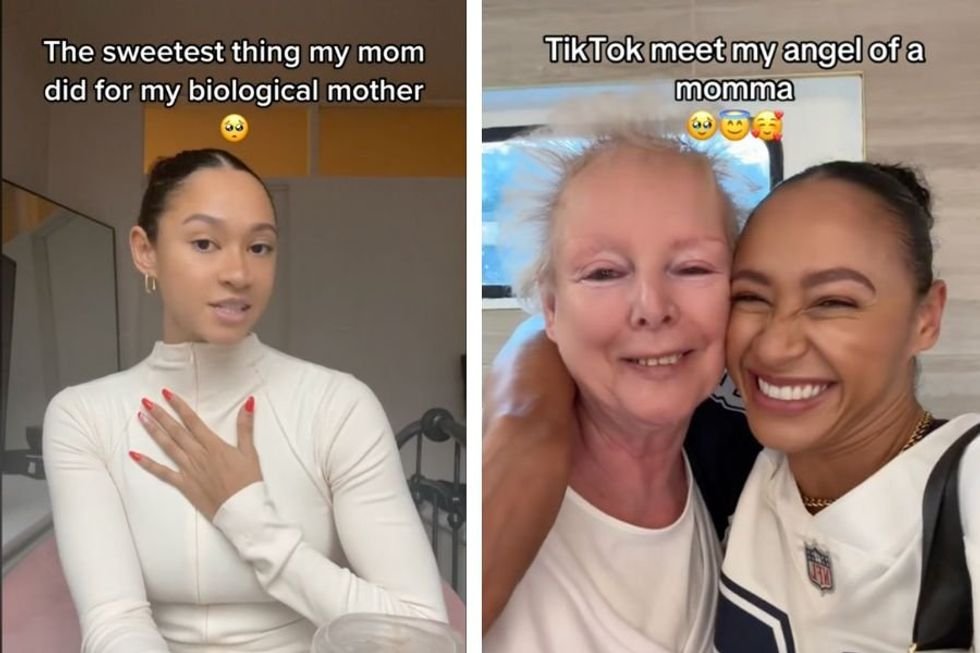 | ||
Her adoptive mother secretly wrote to her biological mother for 17 years. She had no idea. | ||
What an amazingly kind gesture. | ||
By Heather Wake | ||
Closed adoptions, meaning adoptions with no contact between the biological parents and adoptive families, offer privacy, protection and emotional closure. However, it can understandably still be incredibly difficult for biological mothers to instantly and drastically remove their biological child from their life, even if they know they are doing what’s best. | ||
This was the case for Alicia Mae Holloway’s biological mom. In a video shared to her TikTok account, the dancer and television personality shared that her adoptive mother, Evelyn, “saw how hard it was” for her birth mom to give Holloway up for adoption. So Evelyn came up with a kind gesture that Holloway dubbed “the sweetest thing.” | ||
|
Money

You’ll want to check this out.
Venmo. Zelle. Pay Pal. Apple Pay... I have so many random money apps on my phone that I had the delightful experience of popping one open the other day and finding a small pile of money that I'd lost track of! In a world overflowing with super-convenient apps that let you fling money about effortlessly with a swipe, it's easy to assume the old paper check, with its half dozen little form fields, is long dead. It is not. Americans wrote about 9.2 billion checks in 2024, worth more than $24 trillion, which is within shouting distance of the entire U.S. economy.
Jay L. Zagorsky, a Boston University business school professor and one of the few academics who publicly campaigns for cash, wasn't thinking about checks either until his mother died and he found himself writing them to a cemetery, a funeral home, and a gravestone engraver. He wrote more checks in a few months than in the previous decade, then dug through Federal Reserve data to find out who else was still doing it.
The answer is stranger than nostalgia. Check writing per person collapsed from about 150 a year in 2000 to just 27 in 2024, but the average check more than doubled to $2,600, real money in an economy where households are already doing hard math about what it costs to live comfortably.


On September 8, 1966, Star Trek made its U.S. television debut, inviting viewers to imagine a future of interstellar travel, talking computers, handheld communicators, and humans working together across old divisions. NBC canceled the show after just three seasons, but the future apparently kept watching.
Exactly 10 years later, on September 8, 1976, President Gerald Ford met with NASA officials and backed a fan campaign to rename America’s first space shuttle orbiter Enterprise, after Captain Kirk’s fictional starship. Nine days later, the real Enterprise rolled out of its hangar with members of the Star Trek cast looking on and the show’s theme music playing. Not bad for a “failed” TV show: 60 years after its premiere, Star Trek is a reminder that sometimes imagining a better future is the first step toward building one.
Do you have something GOOD to share?
We’re always on the lookout for uplifting, enlightening, and engaging content to share with readers like you. If you have something you think should be featured in the Daily GOOD, let me know!
💬 From the group text…
I’m so sad that I didn’t think to do this! This is how you greet people showing up to visit the new baby.

Join the Group Text! Send us your social media gold.
Until tomorrow, this newsletter is free, but I’d like to think that if it weren't, we’d take cash and checks only.