- The Daily GOOD
- Posts
- A 3D printer. A cornea. A woman who can see again.
A 3D printer. A cornea. A woman who can see again.
See again with a revolutionary new tech. Get a whiff of bosses that stink. Learn how your hearing keeps you sane. Today's stories just make GOOD sense. (ahem)

Greg Sullivan
December 17, 2025 • Est. Reading Time: 4 minutes
In partnership with


“The Guide says there is an art to flying”, said Ford, “or rather a knack. The knack lies in learning how to throw yourself at the ground and miss.”
― Douglas Adams
In this issue...
Health
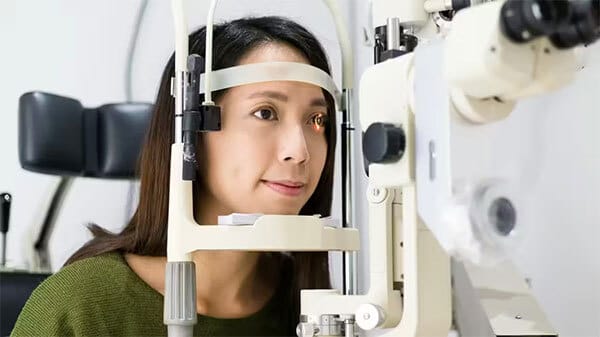
A first-of-its-kind cornea implant didn’t come from a donor. It came from a lab.
If you’re anything like me, you keep flirting with getting a 3D printer. Phone stand, bike mount, maybe a tiny dinosaur for my desk.
Aryeh Batt, the CEO of Precise Bio, had a bigger idea: what if you could print a cornea and help blind people see again?
As Erik Barnes explains in this story, a woman who was legally blind regained her sight after receiving a 3D-printed cornea grown from donated eye cells. Instead of helping just one patient, scientists figured out how to expand those cells and print implants that could work for hundreds more.
The easy joke here is that in a world of emerging AI and rapidly evolving robots, printing bits of biology in a lab is how you wind up with a Westworld situation. But the woman on the receiving end of this tech can see again, and I can’t come up with a playful sci-fi fearmongering twist on that, especially when this method could produce as many as 300 corneas from a single donor, potentially collapsing waitlists and restoring sight to countless people.
It’s early, but if this works at scale, vision care could look very different very soon.


Does your car insurance cover what really matters?

Not all car insurance is created equal. Minimum liability coverage may keep you legal on the road, but it often won’t be enough to cover the full cost of an accident. Without proper limits, you could be left paying thousands out of pocket. The right policy ensures you and your finances are protected. Check out Money’s car insurance tool to get the coverage you actually need.
Work & Money

They show up as jokes, slogans, and “culture talk.” Then suddenly, you’re working weekends.
It’s a challenging time in the employer/employee relationship. Job hugging, career minimalism, quiet quitting, RTO mandates, and the not-so-subtle sense that the C suite wants to replace humans with water chugging AI bots… It’s a lot.
But when does “a lot” become too much? As Erik Barnes reports, there are a few phrases that tend to show up right when a workplace starts sliding from annoying to manipulative.
They often sound friendly. Sometimes, it’s even comforting. And weirdly, they almost always appear when someone needs you to sacrifice your time, your boundaries, or your sanity, but rarely when it is time to talk about raises or bonuses.

Which little corporate phrase has snuck its way into your home life?They're the phrases you love to hate, and that you hate to hear yourself say at dinner. |
Yesterday’s Results
Yesterday, Erik Barnes introduced us to the expert-endorsed approach to stacking more positive habits into our days.
It was a bit of a reach, but the story got me thinking about stacking, and so I ginned up a quiz. What is the record for most dominoes stacked on a single piece? Not many of you knew (because why would you?) that the record was 1,120.
563 (17.8%)
1,120 (28.9%) ✅
986 (40.0%)
237 (13.3%)
Science
There’s quiet, then there’s “Is that the sound of my liver?”
Aching for a little peace and quiet this holiday season? Anything for a few moments away from the carols and ads and jingling bells? We’ve found a place that will give you what you’re after, but it comes with a full dose of careful-what-you-wish-for.
The anechoic chamber at Orfield Labs leverages just about every known tech to limit noise. It holds the world record for the quietest place on earth. Humans typically hear sounds between 0 and 120 decibels, and this place sits at -24.9.
After just a few moments inside, the loudest thing isn’t silence. It’s you. Blood rushing. Joints moving. Organs doing their thing. Some people report hearing their own body so clearly that it becomes disorienting.
There’s a reason the longest anyone has lasted is 45 minutes.


On December 17, 1903, on a breezy beach near Kitty Hawk, North Carolina, the Wright Brothers, Wilbur and Orville, achieved humanity’s first controlled, powered, heavier-than-air flight. From that moment, innovation in aeronautics moved so quickly that nearly 20 million Americans alive that day would live to see humanity set foot on the moon just 66 years later. The first flight, just 120 feet, is shorter than the wingspan of most of today’s commercial airliners.
The story of the Wrights going from bike-shop-owning tinkerers to aviation pioneers is widely known. Less commonly known is what life looked like in the years after, or the critical role their sister Katharine played along the way. Katharine, the only college graduate of the three siblings, served as the operations and communications lead for the Wrights’ Dayton efforts. She was so essential to the company’s success that France included her when awarding the Légion d’honneur for innovation to the family, a rare honor for women at the time.
After their initial success at Kitty Hawk, the Wrights quickly refined their design. Two years later, the 1905 Flyer III emerged as the first truly practical airplane, capable of sustained, controlled flight. In 1909, they sold the first aircraft, the Wright Military Flyer, to the U.S. Army.
After that, as engineers around the world built on the foundation the Wrights had laid, the brothers gradually became patent guardians, spending more time in court fighting and usually winning lawsuits against those copying their ideas than innovating in the industry they launched.
After Wilbur’s death, Orville sold the Wright Company. Through a series of complex mergers, it still exists in part today as Curtiss-Wright, an aerospace and defense technology company, an impressive legacy for a couple of self-taught bike shop owners.
Do you have something GOOD to share?
We’re always on the lookout for uplifting, enlightening, and engaging content to share with readers like you. If you have something you think should be featured in the Daily GOOD, let me know!
💬 From the group text…
The Venn diagram of people that this clip is for is complex. If you find yourself in the overlapping regions of grammar nerds, Christmas carol lovers, and history buffs, well, welcome to our very small club.

Join the Group Text! Send us your social media gold.
Until tomorrow, may you find yourself a bit of not-insanity-inducing quiet in this busy time of year.