- The Daily GOOD
- Posts
- A place for everything in a healthy diet
A place for everything in a healthy diet
Plus, 3D-printed livers that actually work, the never-changing magic of the Muppets, and the Winter Olympics’ post-war comeback.

Greg Sullivan
January 30, 2026 • Est. Reading Time: 4 minutes

“Don't fear failure. Not failure, but low aim, is the crime. In great attempts, it is glorious even to fail.”
― Bruce Lee
In this issue...
Health

Fad diets have always gotten this one thing wrong
There’s always new guidance on which foods to eat and which to quit cold turkey (ironically, cold turkey is rarely mentioned as something to avoid). Whether telling you to skip carbs or cut back on fats, most diets are heavy on guilt, which dietitian Charlotte Carlson explains may be the worst thing you can consume.
A diet is no good if you’re not on it, and regimens that lean in on restrictions and wrist-slapping tend to chase people away. One fiesta at a friend’s place where your prohibition du jour is the main course, and it’s auf Wiedersehen to your efforts. (I may need to back off the Duolingo.)
This doesn’t mean it’s open season on everything. Carlson lays out how restrictive diets fail, what she suggests doing instead, and why she thinks many people might be asking the wrong question when they ask whether they should be dieting at all.


Do you have a GOOD picture to share?
Send us your best images, and we may feature them as the image of the day. Be sure to tell us a bit about your pic.
Culture
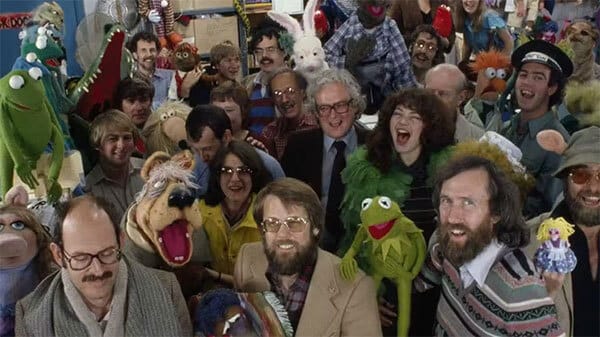
There are more curves in their story than in Gonzo’s nose.
The Muppets were before your time, firmly in your time, and are now somehow part of your kid’s time, too. Kermit, Miss Piggy, Fozzie, Gonzo, Animal, and the few hundred other felt personalities created by Jim Henson have quietly pulled off the rarest trick in entertainment. They refuse to age out.
As Jared Bahir Browsh reports, over their 50 years, the Muppets have averaged a new TV show or movie about once every four years, but it was in an oddly Muppety way that they came to permeate pop culture. They just arrived and started appearing as guests on shows like Saturday Night Live and the Ed Sullivan Show in the same way any other celebrity would, always with a bit of chaos in tow.
Almost as complicated as Piggy and Kermit’s relationship is the extended family tree. Jim Henson also created The Fraggles, the Sesame Street characters, the Skeksis, the inhabitants of the Labyrinth, and more. Are they Muppets? Ask a fan, and you get one answer; ask a copyright lawyer, and you’ll get another.

Which Muppet is your favorite?When it’s time to light the lights, the one I'm waiting to see is... |
And what did we learn?
Yesterday we shared a psychologist’s quirky trick for coping with insufferable conversationlists. How do GOOD readers cope when they find themselves entangled in such a chat? It was nearly a tie between “nod and smile” and “duck out quick!”
I nod, smile, and zone all the way out. (43.9%)
I delight in it! Time for a good argument. (4.5%)
There's always a good excuse to leave. Oh, hey, is that Jim over there? (39.4%)
If I'm honest, I AM probably that person. (12.1%)
Health

It’s a first step that is already showing real results.
For people with liver failure, time is the most fragile resource. There are more than 100 types of liver disease, and patients who need a transplant wait an average of eleven months. Many do not get that long.
Now, researchers at Carnegie Mellon University think they may have found a way to give people more time to wait. Backed by a $28.5 million ARPA-H award, the team has begun bioprinting living liver tissue made from human cells, not to replace an organ outright, but to do something potentially just as powerful.
“This innovation would fundamentally change health care as we know it.”
The idea is a temporary liver patch. Printed tissue that can take over core liver functions for weeks, long enough for a damaged liver to heal itself or for a patient to survive until a transplant becomes available. As Erik Barnes reports, even that limited window could ease the pressure on donor lists and change how liver failure is treated.
If it works at scale, the implications stretch far beyond one organ. This same platform has already produced vascularized pancreatic tissue, and the team believes the approach could eventually be applied across the body.


On January 30, 1948, after having to skip twice due to World War II, the Winter Olympics returned. The games took place in St. Moritz and were the fifth Winter Games since Chamonix 1924. The event drew 28 nations and 669 athletes. With post-war relations still very raw, neither Japan nor Germany was invited to attend.
Headline moments included Dick Button’s first-ever double Axel en route to men’s figure-skating gold, Barbara Ann Scott’s women’s title for Canada, the return of skeleton on the Cresta Run with Italy’s Nino Bibbia winning the host nation’s first Winter gold, robust Nordic wins by Sweden, plus two demonstration events (military patrol and a one-off winter pentathlon). The setting and Switzerland’s neutrality made the “Games of Renewal” a practical, symbolic restart for global sport after a 12-year gap.
From 1924 through 1992, the Summer and Winter Games were held in the same year; an IOC decision in 1986 created today’s staggered cycle, with the first “offset” Winter Games at Lillehammer 1994.
Looking ahead, Milano-Cortina 2026 runs from February 6 to 22, 2026, and will feature the debut of ski mountaineering and new medal events, including women’s doubles luge, mixed-team skeleton, dual moguls, women’s large-hill ski jumping, and the alpine team combined.
💬 From the group text…
In his defense, "Di Di" is a great song.

Join the Group Text! Send us your social media gold.
Until tomorrow, may you remember to play the music and light the lights.