- The Daily GOOD
- Posts
- Arguably, arguing is how to lose an argument
Arguably, arguing is how to lose an argument
No fooling, we've got GOOD advice for winning arguments and seeing the best in people. Plus, important things to know about an emerging feminine product health issue.

Greg Sullivan
April 01, 2026 • Est. Reading Time: 4 minutes

“Astronauts are inherently insane. And really noble.”
― Andy Weir
In this issue...
Ideas

What interrogators know that most of us are doing backward.
One could argue that if you're arguing, you've already lost the argument.
That's what U.S. Navy chief and behavioral expert Chase Hughes told The Diary of a CEO podcast, and as Mark Wales reports, the insight is both obvious in hindsight and genuinely hard to shake: the most effective persuaders don't push. They drop two pieces of information, step back, and let your brain do the rest. Once you connect the dots yourself, the idea feels like yours. And you cannot resist an idea that feels like yours.
Hughes calls it self-persuasion and "maybe the most dangerous persuasion skill there is." It works on kids, on colleagues, on people who have told you, loudly, that they will never change their mind about anything. Especially those people.
There's real science behind why this lands, and once you read it, you'll never hear an argument the same way again.

What's your actual go-to move in an argument?Be honest, for science! |
Yesterday’s Answer
In the Tuesday edition of the Daily GOOD, we shared the oddities of, well, odds. Probability doesn’t work the way you think it does. Our quiz was both an example and proof!
How many people need to be in a room before there's a greater than 50% chance two share a birthday?
183 (36.4%)
57 (26.5%)
23 (21.0%) ✅
365 (16.0%)
Most people thought it would take 183 people, which is about half the number of days in a year, and that makes perfect sense! But that’s not quite right. I struggled to understand this too until I found this great explanation page with interactive gizmos that made it make sense. Check it out!


GOOD reader (and my dad!) Greg Sullivan Sr. took this picture of a sunrise over Canyon Lake, California. Can you spot the hot air balloon? It’s the spec on the left in the clouds.
Do you have a GOOD picture to share?
Send us your best images, and we may feature them as the image of the day. Be sure to tell us a bit about your pic.
Health
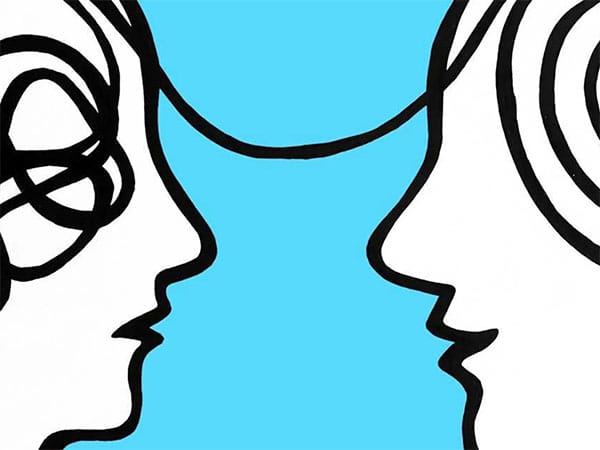
The line between charity and being a pushover is thinner than you'd think.
How do you react when a friend snaps at you? Do you get angry, or do you let it go? Philosopher Mark Schroeder says the right move might be neither. Maybe they're just hangry. Pass them a Snickers bar and move on*. That's charitable interpretation in action: reading someone as a protagonist doing their best in their circumstances, rather than an antagonist acting from contempt.
Schroeder has spent his career working out what it actually means to see the best in people. And the answer is more complicated than "assume good intent." True charity, he argues, requires balancing someone's agency against what's genuinely good about their behavior. Sometimes that means giving them less credit for a bad moment. Sometimes more. The math shifts depending on what you know.
Here's where the Snickers bar comes back. Passing one to a hangry friend is charity. Quietly stocking your bag with extras in case you run into them? That's a different story entirely.
Schroeder has a name for that moment. And a framework for what to do next.
* - The Daily GOOD is not sponsored by Snickers, but if anyone from Snickers wants to send me a box, hit me up!
Health

The science is still catching up. The products aren't waiting.
Most people don't think twice about the ingredients in their menstrual products. Environmental epidemiologist Jenni Shearston did, and what she found has been quietly unsettling researchers ever since.
Lead. Arsenic. Phthalates. PFAS. The chemicals vary by product. What doesn't vary much is whether they show up at all. And the FDA's current standards on what's allowed in these products amount to, basically, a polite suggestion.
What Shearston found, why it's so hard to study, and why some states are already moving to ban specific chemicals while federal regulators idle is worth a read before your next drugstore run.

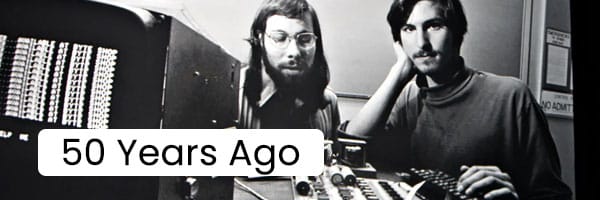
On April 1, 1976, Steve Jobs, Steve Wozniak, and a quietly nervous Ronald Wayne signed a partnership agreement in a California garage, officially founding Apple Computer, Inc. The date was pure coincidence, but history has a sense of humor.
Wozniak was the wizard, Jobs was the dreamer, and Wayne, a 41-year-old Atari employee, was the adult in the room. Spooked by the financial risk, Wayne sold his 10% stake back just 12 days later for $800. Had he held on, that share would eventually be worth hundreds of billions of dollars. It remains one of the most expensive decisions in business history.
The company's first product, the Apple I, was a bare circuit board that hobbyists had to assemble themselves. It sold for $666.66. Nobody called it a revolution.
But what started as three guys and a handshake became the most valuable publicly traded company in American history, reshaping music, communication, and the computer in your pocket. Not bad for a business born on April Fools' Day.
Do you have something GOOD to share?
We’re always on the lookout for uplifting, enlightening, and engaging content to share with readers like you. If you have something you think should be featured in the Daily GOOD, let me know!
💬 From the group text…
Since it’s April Fool’s Day, here’s a fun little visual trick to fool your visual cortex.

Join the Group Text! Send us your social media gold.
Until tomorrow, may your April 1st pranks be harmless, and your arguments productive.