- The Daily GOOD
- Posts
- Could you survive the real Oregon Trail?
Could you survive the real Oregon Trail?
Plus, why you probably can't spot a liar, and a radio broadcast that changed everything.

Greg Sullivan
November 02, 2026 • Est. Reading Time: 4 minutes


“They think that the past is dead. They don’t see that the past is just the beginning of the future.”
― Wen Spencer
If you grew up playing The Oregon Trail, you probably have some unresolved feelings about dysentery. Today, Dr. Elaine Reno revisits the classic computer game to see what it can teach us about actual wilderness survival. Meanwhile, Erik Barnes dismantles some of our most cherished beliefs about spotting liars, and we're celebrating the radio broadcast that changed how Americans got their news. Also, is anybody else still annoyed that it's dark before dinner?
Health

An emergency medicine doctor revisits the game's surprisingly useful lessons.
I was exactly the right age for The Oregon Trail. Not the real one, mind you, but the ancient computer game that was my first foray into video gaming. I died in that game. A lot. Dysentery, starvation, unfortunate river crossings. If there was a way to perish on the journey west, I probably found it.
Of course, I always assumed the game was mostly teaching me how miserable life was before antibiotics and indoor plumbing. But what if some of those lessons are still useful today? Even with GPS, smartphones, and modern medicine, the great outdoors remains remarkably good at killing the unprepared.
Dr. Elaine Reno, an emergency and wilderness medicine specialist, decided to revisit the game through the eyes of someone who actually knows how to keep people alive. And as it happens, our pixelated pioneers had a few things to teach us about surviving a modern camping trip.
You may never need to ford a river with a wagon full of oxen, but some of the game's deadliest mistakes are still surprisingly easy to make. Here's what you should know before heading into the wilderness.


I hate daylight saving time changes! My son just got home from school; why does it look like this stunning image from GOOD reader Cynthia Watson outside already? Well, not just like this. I don’t have a beautiful lake or boats in my backyard. But the sky… it shouldn’t be dark yet.
Do you have a GOOD picture to share?
Send us your best images, and we may feature them as the image of the day. Be sure to tell us a bit about your pic.

Grocery shopping and cooking for one or two can feel like a drag: the same meals on repeat, or spending money on a bunch of ingredients that you don't use.
Marley Spoon makes dinner effortless with chef-crafted recipes and pre-portioned ingredients delivered straight to your door. With 100+ weekly recipes, you get plenty of delicious variety to keep things interesting—and no wasted food or extra grocery runs.
Spend less time worrying about dinner and more time enjoying it.
Use code UPWORTHY at checkout for 40% off your first box, with additional savings across your next four boxes.

We've changed the clocks again. How are you feeling?An extra hour of sleep, at what cost? |
Last Week's Results
In Friday's issue, we shared some ghost stories with surprisingly real histories and wrapped up our weeklong Halloween celebration.
Then we asked: The good Halloween candy has mysteriously disappeared. What do you know?
Well, half of you admitted to taking a few pieces as a candy-handling fee. Another 24% ate the candy and bought replacements. Which means 74% of you are willing to confess to some degree of candy-related misconduct.
I bought a separate stash. This was preventable. (12.0%)
I took a few. Call it a candy-handling fee. (50.0%)
I ate it and bought replacements. The system works. (24.0%)
I have no comment until I've spoken with my dentist. (14.0%)
GOOD reader Daley Patrician speaks for all of us! “Can’t help meself!”
Generations | Courtesy of Upworthy
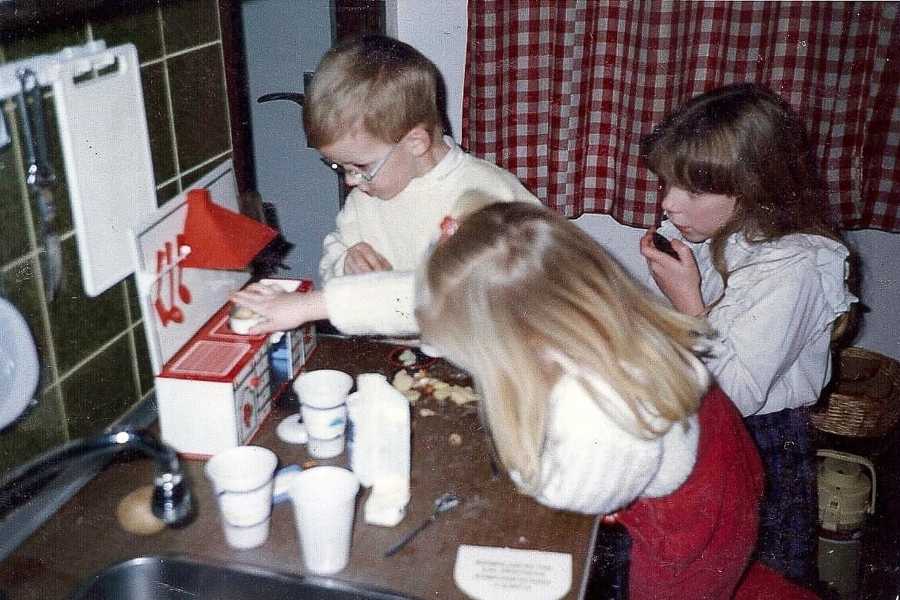 | ||
People born before 1970 share what they ate for dinner growing up, and it’s a blast from the past | ||
So much meatloaf and Shake ‘n Bake. | ||
By Annie Reneau | ||
“What’s for dinner?” has been asked by kids for millennia, probably, and the most common answers depend on both where and at what time in history it was asked. In ancient times, people were limited to what they could hunt or gather. Medieval recipes look different from what people ate in the 19th century. And what our grandparents ate when they were children was different from what our kids eat today. | ||
Obviously, people couldn’t DoorDash Chipotle in the ’70s, but when someone on Reddit asked people born before 1970 what they ate for dinner most weeks, there were some standard meals a lot of Americans clearly ate regularly growing up. Lots of meatloaf and beef stroganoff. Pork chops and chop suey. Convenient assistance from Shake ‘n Bake, Hamburger Helper and TV dinners, which Swanson popularized starting in 1954. Canned fruits and veggies. And so much Jell-O. | ||
|
Ideas

The three body language "tells" almost everyone believes in have almost no science behind them.
You've seen it in every crime show and read it in every pop-psychology listicle: liars avoid eye contact, their faces betray them with micro-expressions, and they fidget like they're sitting on a secret. The problem is that none of it holds up under scrutiny. As Erik Barnes reports, researchers and body language professionals have systematically dismantled the three biggest myths about how to spot deception, and the real answer is both simpler and less cinematic than you'd hope.
Take the eye contact myth. People look away for all sorts of reasons: they're pulling up a memory, they're nervous, or they belong to a culture where sustained eye contact reads as aggressive, not honest. Neurodivergent people may struggle with eye contact whether they're telling the truth or the biggest whopper of their lives. And facial expressions? Scientists can't even agree on how many we have. One book says 20,000; another claims 250,000; the most recent peer-reviewed research landed on 21. If the experts can't count them, good luck reading them across a dinner table.


On November 2, 1920, Pittsburgh radio station KDKA made history with what's widely considered the first commercial radio broadcast, delivering presidential election results to roughly 1,000 listeners.
For the first time, Americans could hear who won without waiting for the morning newspaper. Within a few years, radio stations were popping up everywhere, and a new era of mass entertainment was underway.
Do you have something GOOD to share?
We’re always on the lookout for uplifting, enlightening, and engaging content to share with readers like you. If you have something you think should be featured in the Daily GOOD, let me know!
💬 From the group text…
If I could have a superpower, I think this might be the one I want.

Join the Group Text! Send us your social media gold.
Until tomorrow, be careful fording that river!