- The Daily GOOD
- Posts
- Don't forget, photographic memory isn't real
Don't forget, photographic memory isn't real
Why your fitness plan keeps dying has a name, a date, and a fix small enough to finish during a lunch break. Then: photographic memory is not a real thing, and 1839's most generous giveaway.

Greg Sullivan
August 19, 2026 • Est. Reading Time: 4 minutes

In partnership with


“…but before you start pointing fingers... make sure your hands are clean!”
― Bob Marley
In this issue of The Daily GOOD, physical therapist Laura Baehr explains why the distance between knowing and doing is not a willpower problem, and why her fixes are small enough to finish before the microwave beeps. Then: Annie Reneau on the dishwasher habit she quit, first shared on our sister site Upworthy, the memory myth running through half your favorite shows, and a fog bank on Lake Superior worth a long look.
Well-being

Knowing and doing are two completely different muscles.
I woke up an hour early this morning. Beautiful So-Cal day. Did I go for a walk? Reader, I did not. Physical activity improves your mood, energy, and sleep after just a few sessions, and over the long haul, it lowers your risk of heart disease, diabetes, and some cancers. Everyone knows this. Everyone has heard it from a doctor, a national health organization, or a shirtless stranger on TikTok. And most Americans still aren't getting enough of it.
As Laura Baehr, a physical therapist and rehabilitation scientist who designs movement programs for people living with chronic conditions, explains, the problem isn't a lack of information. Research is clear that education alone doesn't predict behavior. What does is a single personal trait a psychologist identified back in 1977, and it has almost nothing to do with willpower or discipline. It comes down to what you believe about yourself on the day you miss a workout.
Baehr's fixes are almost insultingly small. One of them you can do while your lunch is in the microwave. Another has nothing to do with the exercise itself and everything to do with who happens to be standing near you while you do it. If you've already bailed on optimization culture and its full-time-job approach to wellness, this is the opposite: a case for micro walks, stolen flights of stairs, and the daily steps you were taking anyway.


This haunting image in silver brings up conflicting feelings. On the one hand, it is shockingly beautiful. On the other, I’ve seen too many scary movies start like this. GOOD reader Deborah Kramb captured this image during a recent trip to the Great Lakes. “We stopped in on Silver Islet, a fascinating harbor with an interesting background. The famous Lake Superior fog settled in as we made our way to shore.“
Do you have a GOOD picture to share?
Send us your best images, and we may feature them as the image of the day. Be sure to tell us a bit about your pic.
Finally, a stand mixer that can stand up to dough

Ever tried to make dough in your regular mixer?
The results aren’t pretty: Clumpy texture. Stodgy bread. Overheated motors.
So, we took the same dough-making technology that professional bakers have used for decades and packed it into a countertop machine.
Introducing Ooni Halo Core Spiral Mixer.
Its secret? Two high torque DC motors. These keep the mixer sturdy and stable even at top speed, while unlocking a powerful dual-kneading action — for softer loaves and a higher rise when it’s time to bake.
But don’t just take our word for it.

What actually gets you out the door?Not what should. What does. |
And what did we learn?
We asked which chore secretly runs your whole evening. 58% of you walked right past the dishes and the laundry and named the one that never even makes it onto the chart.
The dishes that regenerate overnight (13.8%)
The laundry pile with no known bottom (5.1%)
Deciding what to have for dinner... again (58.7%)
The invisible stuff nobody counts until it stops (22.5%)
GOOD reader Lady Snow spoke up for the majority with something I think we can all get behind. “I need a live in cook who will just feed me.” Seconded, and the motion carries!
Life Hacks | Courtesy of Upworthy
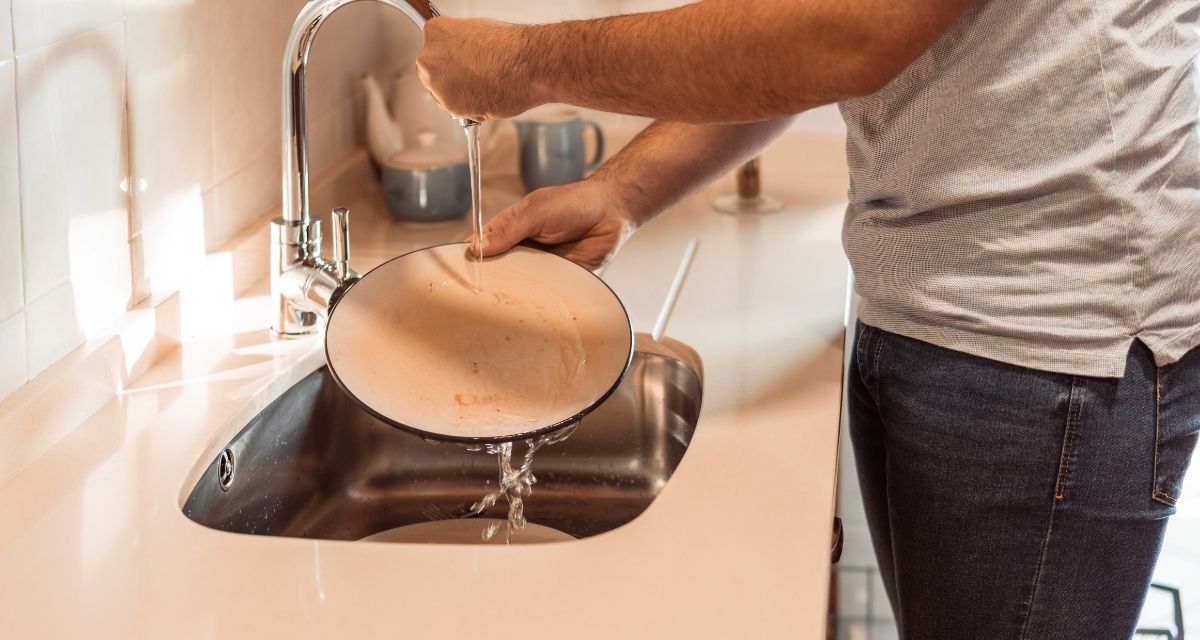 | ||
I stopped rinsing my dishes before putting them in the dishwasher. It changed everything. | ||
My dishes are cleaner, but the bigger lesson has been life-changing. | ||
By Annie Reneau | ||
When people share their best life-changing advice, “Stop rinsing your dishes” doesn’t top many lists. But acting on that advice has changed my life, literally, and in ways I never would have imagined. | ||
First, rejecting the rinse has genuinely saved me time, effort, and money. But it’s also taught me something fascinating about human nature and resistance to change. | ||
Let me explain. | ||
|
Health

Photographic memory does not exist, try to remember that.
Hollywood loves a cognitive superpower: the character who glances once at a page, a room, or a face and later plays it back in perfect detail. It runs through Suits, Sherlock, and The Girl with the Dragon Tattoo. Most recently, The Pitt used it to save a chaotic hospital shift. Great scene. Not really a thing.
Which is especially fitting today, since (as you can read below!) 187 years ago France gave away the patent for photography. Cameras, it turns out, are very good at being cameras. Your brain, not so much.
As Gabrielle Principe explains, memory doesn't record the past. It rebuilds it. Every time you remember something, you're assembling fragments through the lens of your current mood, knowledge, and goals. Even memory champions rely on practiced strategies, not different hardware.
And forgetting isn't necessarily a defect. It helps old lessons fit new situations, softens painful memories, and protects your sense of self. Principe's closing move is to give memory a better metaphor than "camera," and it's a pretty convincing upgrade.


On August 19, 1839, in a packed hall at the Institut de France, the French government did something almost nobody does with a world-changing invention. It gave the daguerreotype away. Louis Daguerre had spent years perfecting a way to fix a permanent image onto a polished, silver-coated copper plate, and rather than keep the process proprietary, France compensated Daguerre and his late partner's son, Isidore Niépce, with lifetime pensions and published the complete working instructions as a gift "free to the world."
There was one asterisk. Five days earlier, an agent acting on Daguerre's behalf had secured a British patent, which meant England was the one place where people had to pay for the free gift. Very funny, and very 1839.
The instructions spread fast. By 1850, New York City alone had more than 70 daguerreotype studios, and ordinary people who had never once seen their own likeness could suddenly own one. That public release helped ignite photography's explosive growth around the world, and August 19 is now celebrated as World Photography Day.
Do you have something GOOD to share?
We’re always on the lookout for uplifting, enlightening, and engaging content to share with readers like you. If you have something you think should be featured in the Daily GOOD, let me know!
💬 From the group text…
Would you crew a real tall ship to the Antarctic? Because, beloved GOOD readers, I’d do it in a heartbeat!

Join the Group Text! Send us your social media gold.
Until tomorrow, try to remember to get outside. You’ll feel better for it.