- The Daily GOOD
- Posts
- A Spanish psychologist says the 'best stage' of life begins with a mindset shift
A Spanish psychologist says the 'best stage' of life begins with a mindset shift
The age at which you're happiest, what 20 kids did when given free rein, and the BBC crew that broke the first rule of documentary filmmaking for a GOOD cause.

Greg Sullivan
December 10, 2025 • Est. Reading Time: 4 minutes
In partnership with


“I accept chaos, I'm not sure whether it accepts me.”
― Bob Dylan
In this issue...
Health

If your answer to “which stage of life is best” involves a number, you’re already in trouble.
Ask anyone which age they’d like to be, and the answer will almost always be some variation on “not the one I am now". The young want to be older, the old want to be younger, and the middle-aged could go either way.
Spanish psychologist and author Rafael Santandreu says the age at which people are happiest is… whichever age they are when they master the art of not complaining about their age.
“The best stage of a person's life is when they start (…) to value the incredible, almost magical things around them at every moment.”
Simplistic? Sure. Trite? Maybe. But the idea is also backed by research. As Erik Barnes reports, both the CDC and the American Brain Foundation agree that outlook plays a surprisingly powerful role in mental health. Each age has its own very real challenge, but they each also have their own unique delights and joys. Choosing to focus on the latter can lift the weight of the former. Click through for all the research and tips on how to turn the age you are today into the best age of all.


More than $10k in debt? We can help.

Debt happens. Getting out starts here.
Millions of Americans are tackling debt right now.
Whether it’s credit cards, loans, or medical bills, the right plan can help you take control again. Money.com's team researched trusted debt relief programs that actually work.
Answer a few quick questions to find your best path forward and see how much you could save. answer a few short questions, and get your free rate today.

What were the results of the famous 1952 Harlow’s surrogate mother experiments?Researchers gave baby monkeys a choice between wire “mothers” with milk versus soft cloth “mothers” without. How did that play out? |
Yesterday’s Results
Yesterday I asked how you would like to see The Daily GOOD cover the ever-headlining world of artificial intelligence. Nearly 70% of you would like at least some coverage on this emerging, exciting, and frightening tech.
Please keep me updated often, it's important and fascinating. (38.2%)
Can this please be the one place I don't have to hear about it? (28.9%)
Just give me the important updates, I'll do my own philosophizing, thanks. (31.6%)
Reader DanaPeregrine had this to say in the comments. “Transparency about any AI used or shared in this newsletter would be appreciated.” Ask, and you shall receive, Dana.
The Daily GOOD is handcrafted by me, a human named Greg. Hi! The content is either original or derived from work done by the wonderful human writers at Good, whom I credit every day. We use tools like Grammarly and ChatGPT to help with quality control, mainly for research assistance (which we verify by hand), spelling, grammar, etc., but not writing.
We also do not use AI-generated images, though sorting the real from the fake is a challenge that is only getting more difficult. We will stay vigilant.
The long and short of it is, we believe in finding, sharing, and creating content that uplifts and empowers, and it’s the policy of this newsletter and our site that this is best done by real people.
Culture

How can something be simultaneously so predictable and so absolutely fascinating?
My first thought when reading this story by Adam Albright Hanna was, “Oh, no. I would never let my kid do that.” He’s a great kid. Really. But put him in a camera-filled house with nine other boys, no supervision, and total freedom to do as he pleases? I would never allow that footage to be released. Thankfully, in the mid-2000s, the parents of 20 children somehow let themselves get talked into doing just that, or we’d never have had the UK documentary "Boys and Girls Alone."
The show does just what the title implies it will. A group of ten tween boys, and a group of ten tween girls, each set loose for a week in separate, fully stocked houses and told to have a good time. Entertainment value aside, your almost-certainly-correct guess about what happened raises fascinating, long-standing questions about nurture vs. nature.
Culture

Two stories about Brits and rule-breaking in one issue? Blimey!
In November 2018, a crew was filming a series called Dynasties when a freak storm set in. As cameras rolled and the team watched, a large group of Emperor penguin mothers and chicks was forced into a steep, icy ravine and became trapped.
"How would this conversation be going if you said you saw them there and did nothing? I think you have to do it."
The rule was clear: documentary crews are not to interfere with their subjects.
Producer Mike Gunton framed it as a moral imperative rather than a documentary breach. "We have a rule that interfering is a very dangerous thing to do. But these penguins were going to die through a freak act of nature if nothing happened," he said.

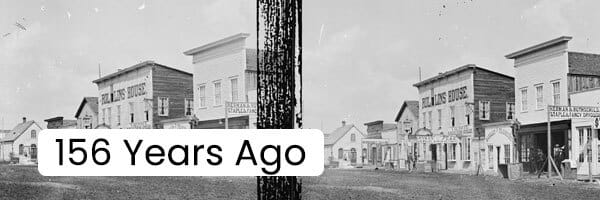
During the 1860s, the brand new territory of Wyoming had jobs aplenty, but the sort of jobs it was offering, building railroads, mining, and ranching, were drawing mostly young men. Adult women were outnumbered in the territory six to one. Democrats came up with a plan that they thought couldn’t lose for them: suffrage for women. Either it would pass, and women would flock to the state to enjoy the right to vote, or the Republican governor would veto the bill, and they could leverage that to their political advantage.
On December 10, 1869, John A. Campbell signed the bill, making Wyoming the first government in the world to grant full women’s suffrage. Women did come to the state, and, to the Democrats' dismay, voted in droves for mostly Republican candidates.
Later, the prospect of statehood was raised if the territory would revoke suffrage for women, but the state famously replied, "We will remain out of the Union 100 years rather than come in without the women." It wouldn’t be until 1890 that Wyoming would join the Union, with its voting rights intact.
A perfect storm of political gamesmanship, gender imbalance, and demands for progress put Wyoming at the frontier of gender equality, which led in time to the 19th Amendment. Today, Wyoming has a nearly perfect balance of men and women, so it could be argued that in the end, the plan worked.
Do you have something GOOD to share?
We’re always on the lookout for uplifting, enlightening, and engaging content to share with readers like you. If you have something you think should be featured in the Daily GOOD, let me know!
💬 From the group text…
I have cats, so I can’t have birds… I have cats, so I can’t have birds… GAH! I think I’m going to have to get a bird!

Join the Group Text! Send us your social media gold.
Until tomorrow, may you wear the age you’ve got with pride and joy.