- The Daily GOOD
- Posts
- The cost of the great snooze-button wars
The cost of the great snooze-button wars
Sleep is complicated, waking is a pain. Science comes up with a gel of a new approach to wound care. We are literally using the phrase 'bird-brained' all wrong.

Greg Sullivan
March 02, 2026 • Est. Reading Time: 4 minutes
In partnership with


“I have not failed. I've just found 10,000 ways that won't work.”
― Thomas A. Edison
Dear GOOD readers,
I missed you while I was on vacation! My knees are feeling the effects of my brief time on the slopes, but I survived, and I’m looking forward to bringing you more GOOD news.
- Greg S
In this issue...
Health

3 million nights of data reveal the cost of someone else’s schedule.
One man found himself perpetually fatigued and didn’t know why until he peeked at his wife’s phone. While he was trying to sleep, she was having a passionate love affair with… her phone’s alarm feature. She had to be up 45 minutes before he did, but had trouble waking up, so she’d set NINE alarms at five-minute intervals. The slow drip of alarms pulled him out of his deepest sleep and left him hovering in that half-awake, half-miserable state long before his own day had to begin.
The man’s story aligns with data from a 2025 study by Harvard Medical School and Brigham and Women’s Hospital, which analyzed more than 3 million nights of sleep data and found that 55.6 percent of sleep sessions ended with a snooze alarm.
But, as this story by Adam Albright-Hanna explores, sleep is a complicated thing! Though the average snoozer hits that button 2.4 times a morning, some people benefit from that little extra bit of time.
So is the problem the snooze button? Or is it what happens when two different circadian rhythms share one mattress? The real tension might not be in the alarm settings at all.

What is your relationship with the snooze button?One button with so much power! |
And what did we learn?
Before I snuck off to try my luck on a pair of skis, we discussed the science behind picky eaters.
So, how should parents deal with a picky eater? GOOD readers had a pretty balanced pile of opinions, but getting kids in the kitchen took the win with 27%.
Make them what they like. Dinner should be low-friction, not a hostage negotiation. (9.1%)
They eat what you eat. This is a family, not a short-order diner. (15.9%)
They won’t starve. Put it down, stay calm, and let hunger do its thing. (18.2%)
Get them involved. If they help cook it, they’re more likely to try it. (27.3%)
One safe food + one stretch food. Comfort meets courage. (22.7%)


This earth-shaking image of STS 1 captures the moment, just after liftoff, of the first-ever Space Shuttle Mission. Note the white of the main fuel tank that would eventually become the orange most of us think of when picturing the shuttle.
Do you have a GOOD picture to share?
Send us your best images, and we may feature them as the image of the day. Be sure to tell us a bit about your pic.
Smart starts here.
You don't have to read everything — just the right thing. 1440's daily newsletter distills the day's biggest stories from 100+ sources into one quick, 5-minute read. It's the fastest way to stay sharp, sound informed, and actually understand what's happening in the world. Join 4.5 million readers who start their day the smart way.

We’ve been working hard behind the scenes to completely overhaul our site, and now it’s live and ready for you to enjoy. Cleaner layout, easier navigation, better on phones, and so much more GOOD stuff to love, all with the same positive, smart, playful content you love.
We are running a survey to get to know our readers. If you can spare a few minutes, we’d love to get to know you better so we can make The Daily GOOD an even better part of your day.
And if you’ve already responded, thank you so much for taking the time!
Health

Is there nothing that a battery can’t make better?
My favorite kind of story. Sci-fi made real! Imagine a gel combined with an electricity source that leverages electrolysis within the body to heal wounds.
That is exactly what researchers at UC Riverside have built. In this story by Mark Wales, we learn how a soft hydrogel paired with a hearing-aid-sized battery can generate a steady stream of oxygen directly inside damaged tissue.
Even wilder? The same oxygen bottleneck is what keeps lab-grown organs from reaching full size. The team believes this tech could help bridge that gap.
A squishy patch. A tiny battery. And a very real shot at turning “unhealable” into “handled.”
Health

Scientists scanned birdwatchers’ brains and found something they did not expect.
Like most people and the word “literally*,” we may be using “bird-brained” all wrong.
In this story by Erik Barnes, researchers put experienced birdwatchers into brain scanners and discovered something surprising. The more seasoned the birder, the stronger certain key areas of the brain appeared, including in older adults.
Then they made them identify unfamiliar birds, and their brains lit up regions tied to memory, focus, and visual processing. Apparently, distinguishing a finch from a warbler is not just a flex. It may be a workout.
Doctors say birding quietly combines pattern recognition, deep recall, constant novelty, and social connection. Which means that a peaceful morning with binoculars might double as cognitive cross-training and “bird-brained” might actually be a compliment.
* - OK, I have a complicated relationship with the word ‘literally’ because I hate hate hated it when people used it wrong! “I’m so hungry I could literally eat a horse.” Oh, could you? Right. Then a fellow writer pointed out that the word alludes to literature, as in fiction. So, I looked into it and ‘literally’ literally meant figuratively in its original form. It literally changed meanings, and those people using literally figuratively were literally using it correctly and now I literally don’t know how to feel.


In 1872, Congress did something quietly radical: it refused to sell a spectacular piece of the West.
On March 1, 1872, President Ulysses S. Grant signed the law setting aside Yellowstone as a “public park or pleasuring-ground… for the benefit and enjoyment of the people.” At the time, that was almost an anti-American move, because the standard play was to privatize land, not preserve it.
So what changed? Proof. The 1871 Hayden Survey arrived with scientists, maps, and the era’s killer app: photography. William Henry Jackson’s images (and Thomas Moran’s art) helped lawmakers “see” the place and fear it would be carved into pay-to-enter attractions if they didn’t act first.
The ripple effect is huge: Yellowstone became the prototype that helped justify the creation of a dedicated agency, the National Park Service (1916), with its famous “leave them unimpaired” mandate.
Today, America’s National Park Service sets the global gold standard for what public-land stewardship can be, and has inspired incredible national parks around the world. The system now spans 433 sites and 85+ million acres, from iconic wilderness to irreplaceable cultural landmarks.
Do you have something GOOD to share?
We’re always on the lookout for uplifting, enlightening, and engaging content to share with readers like you. If you have something you think should be featured in the Daily GOOD, let me know!
💬 From the group text…
This isn’t at all what it sounds like when I spend time with my niblings (yes, that is the collective term for nieces and nephews).
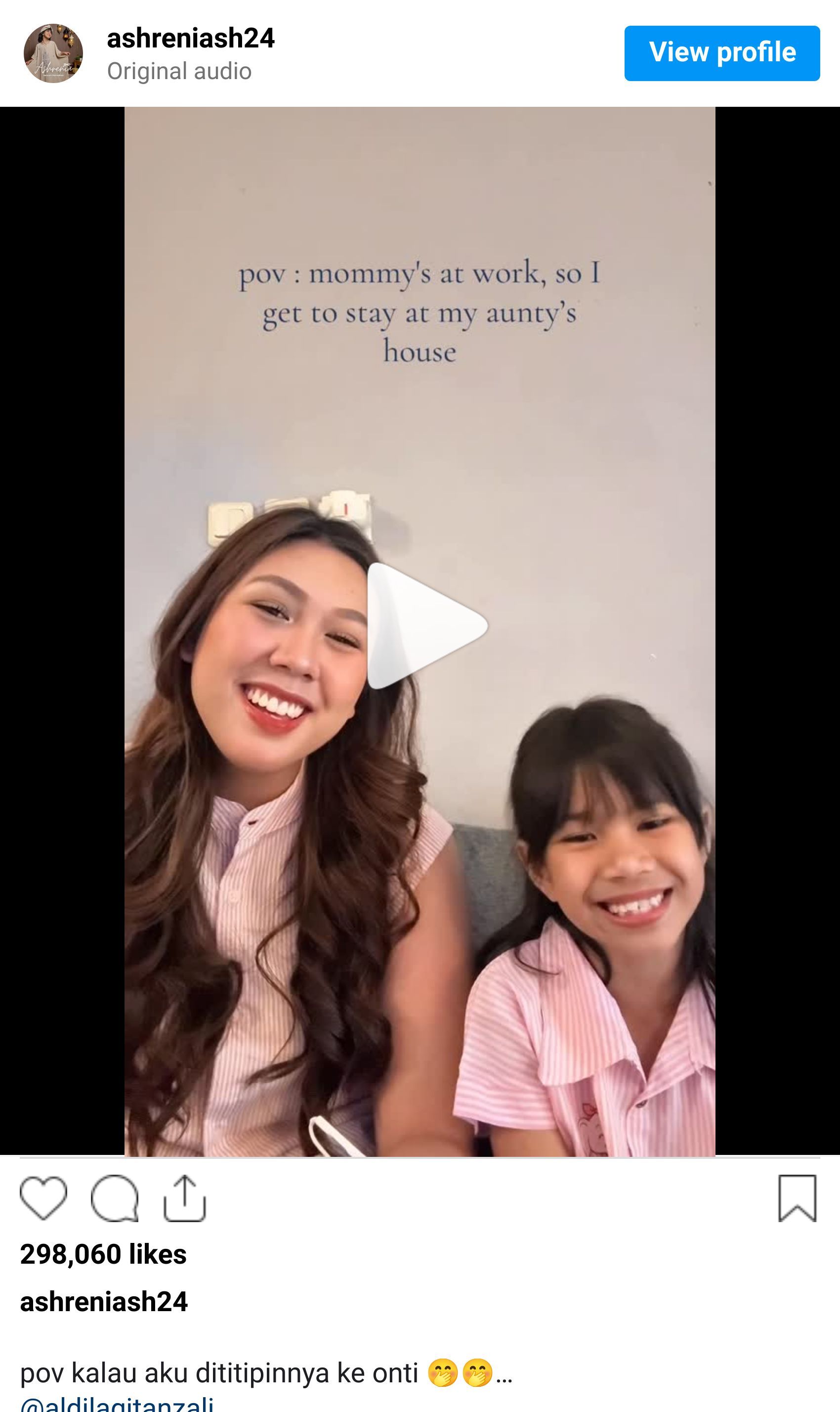
Join the Group Text! Send us your social media gold.
Until tomorrow, keep your eye on the birds and your hand off the snooze button.