- The Daily GOOD
- Posts
- The selfish upside of being a good person
The selfish upside of being a good person
What makes your work worth doing? Being a good person is mental health, not martyrdom. Oh, and hey, bro, throw that Frisbee back!

Greg Sullivan
January 23, 2026 • Est. Reading Time: 4 minutes

“The fight is won or lost far away from the witnesses, behind the lines, in the gym…”
― Muhammad Ali
In this issue...
Culture

As Leslie Knope says, the best thing in life is “a chance to work hard at work worth doing.”
Research sometimes reveals great mysterious truths. Other times, it “reveals” things like the fact that people who like their jobs are happier. Well… yeah. Let me go get your Nobel Prize, doc.
But this story by Mark Wales isn’t about the obvious upside of having a good job. It’s about what makes a job good in the first place. One quality that keeps coming up is the opportunity to serve. People love feeling useful. (See the next story in this newsletter!)
From nonprofit workers and teachers to park rangers and surgeons, the happiest workers aren’t chasing prestige or paychecks. They talk about autonomy, challenge, creativity, and doing something that matters. Turns out being mentally engaged helps too (and our third story covers that!).

What keeps you at your job?Your boss won't know how you vote, be honest! |
And what did we learn?
Yesterday, we debunked almost the entire concept of the detox/cleanse and gave some great advice on what to do instead.
I asked GOOD readers what they think of the entire detox concept. Most of you are just not having it… but some? Some of you are a little detox-curious.
P'shaw to your research. I detox all the time! (8.6%)
It's a harmless way to reset and I do it now and then. (8.6%)
I'm curious and what can it hurt? I'll try it someday. (27.1%)
I know snake-oil when I see it. No thanks! (55.7%)
Reader Cathain MacTire* summed up the science brilliantly. “As long as you have a liver and kidneys that work, that's all the detox you need. Anything else is just wishful thinking.”
* - My system doesn’t show me how you capitalize names when you leave comments, so I’m out here guessing. Hope I got this right!


The only thing more enchanting than this photo taken in Oerlinghausen, Germany, sent in by GOOD reader Tracy Shaw is how she came to have it. A local woman snapped the picture, then tracked Tracy down through a chain of friends after recognizing her from a chance sidewalk conversation, proving the world really does get smaller when you stop to talk.
Do you have a GOOD picture to share?
Send us your best images, and we may feature them as the image of the day. Be sure to tell us a bit about your pic.
Health

Rejected headline: Aristotle was right. Sorry, Nietzsche!
New research shows what misanthropic grumps have always suspected: good people are in it for themselves.
Well, sort of.
Philosophers have debated the merits of selflessness for millennia. Aristotle argued that virtue is vital to well-being, while Nietzsche famously set morality and self-interest in opposition to one another. Philosophy apparently isn't up to the task of settling this debate, so researchers got their science on.
As Michael Prinzing reports in this story, researchers examined 43,164 moments from 1,218 people and found that the do-gooders have the right of it. Compassion requires suffering. Patience requires irritation. Self-control means saying no to something you want. But here’s the twist: people who were more compassionate, patient, and self-controlled overall tended to feel better in general.
Sorry, philosophy, this point goes to science.
Health
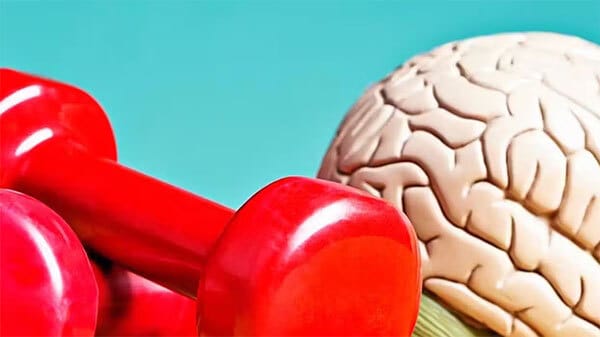
Your brain is skipping leg day, and it shows.
Even if you’re gym-averse, you understand the concept of leg days and arm days. You can’t just hit the same muscles all the time, or you’ll start to get diminishing returns while other muscles atrophy. As Joanna Fong-Isariyawongse reports, your brain is no different.
“That slight mental discomfort is often the sign that the brain is actually being trained.”
So how should you whip your gray matter into shape? Mix it up! Novelty forces the brain to pay attention and adapt. Try taking a new route on a familiar walk or picking up a hobby that feels just slightly uncomfortable (Why is a ‘half double crochet’ so confusing?!?).
Read the whole story to see how to build a brain routine that actually works and why rest is as important as reps.


On January 23, 1957, Wham-O took what had started as a tin for the Frisbie Pie Company, made it plastic, tweaked the spelling, and released the Frisbee. Beach days, park hangouts, and college campuses were never the same.
It looks simple, but the Frisbee is surprisingly precise. Those concentric rings are not just decorative. They are aerodynamically intentional, patent-worthy in 1967, and the reason your throw does not immediately nosedive into the grass.
With the release of Frisbee, Wham-O had a hit that quickly went from campus curiosity to a bona fide craze, selling hundreds of millions of units. That’s roughly one for every roof in America, where most Frisbees wind up [citation needed].
The Frisbee spawned several sports, most notably Ultimate (think Frisbee soccer) and Disc Golf (think, well… golf, but with Frisbees). The Frisbee has also become a favorite among dogs, who continue to treat it less like a flying disc and more like a personal mission to achieve greatness.
Do you have something GOOD to share?
We’re always on the lookout for uplifting, enlightening, and engaging content to share with readers like you. If you have something you think should be featured in the Daily GOOD, let me know!
💬 From the group text…
Facial hair seems to be in fashion, but if it ever goes out of fashion and you have kids… You might have to come to terms with being unfashionable.

Join the Group Text! Send us your social media gold.
Until tomorrow, may you put in some reps for your mind and your body. Let’s get swole!