- The Daily GOOD
- Posts
- The winter blues are real, the fixes are smaller than you think
The winter blues are real, the fixes are smaller than you think
Today, the GOOD writers explore Seasonal Affective Disorder and how to beat it, a worrying decline in bugs, and seven things Boomers, and only Boomers, still think are polite.

Greg Sullivan
December 11, 2025 • Est. Reading Time: 4 minutes
In partnership with


“A room without books is like a body without a soul.”
― Marcus Tullius Cicero
In this issue...
Health

S.A.D., winter blahs, or burnout? A psychologist has one small fix.
S.A.D. feels like one of those acronyms that they came up with first, then backed into afterward. Seasonal Affective Disorder, however they came up with the name, is a very real thing that affects millions of people, well, seasonally. Sufferers can experience S.A.D. as a loss of interest, sleep changes, or just a general feeling of heaviness, and there’s a good chance you’re one of them.
Psychologist Dr. Raquel Martin has great news if big, dramatic life changes aren’t in the cards for you. In the full story by Erik Barnes, Martin lays out the causes of S.A.D and the surprisingly small but effective ways you can start getting ahead of it. Think micro-adjustments and anchor activities.
If big changes feel impossible this time of year, that’s perfect. Martin argues you don’t need them. You just need a few well-placed tweaks.


Does your car insurance cover what really matters?

Not all car insurance is created equal. Minimum liability coverage may keep you legal on the road, but it often won’t be enough to cover the full cost of an accident. Without proper limits, you could be left paying thousands out of pocket. The right policy ensures you and your finances are protected. Check out Money’s car insurance tool to get the coverage you actually need.
Science

Noticing fewer bugs on your windshield lately? You’re not alone.
If you’ve ever secretly wished for fewer creepy crawlers, this might feel like a win. But as Ryan Reed reports, the trend is starting to spook the people who actually count bugs for a living. Researchers tracking insect biomass are seeing steady declines in regions around the world, and the numbers are creeping into the kind of territory where ecologists start using phrases like “tipping point.”
Scientists estimate we may be losing between 1 and 2.5 percent of total insect biomass every year in some areas. That sounds tiny until you remember how many pieces of the food web rely on bugs quietly doing their jobs.
“You’re not crazy—bug populations have been declining all around the world in alarming numbers”
Still, not every species is on the same downward slide, and the fixes might be closer to home than we think. Small choices in our yards, our cities, and our farms could slow the decline. The question is whether we act fast enough to matter.
Culture

Dropping in unannounced? That’s so last season.
Fashion, names, slang. Some things just go out of style. Sometimes they come back. Sometimes they vanish forever. Common courtesy feels evergreen, but Boomers are finding themselves increasingly out of sync with younger generations over the small stuff. And this latest clash suggests that what counts as “polite” might be just as trend-driven as what counts as rad hip with it cool.
Imagine this. You are on the couch, halfway through episode two of the final season of Stranger Things (seriously, how old are these kids supposed to be by now?) when there’s a knock at the door. You open it to find a friend dropping by unannounced. No text. No warning. Just… vibes. If you’re delighted, odds are you’re a Boomer. For just about everyone else, it’s an intrusion at best.
As Mark Wales reports, this moment is just one example of a quiet generational shift. What used to feel thoughtful or even respectful now lands as awkward, stressful, or boundary-crossing. And the unplanned visit is only the beginning. Mark rounds up six everyday behaviors that went from polite to problematic when no one was looking.

You want to visit someone. How much warning do they get?Somewhere along the way, this got complicated. |
Yesterday’s Results
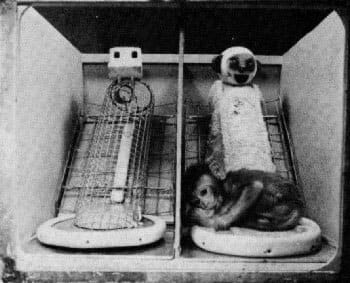 | Controversial psychologist Harry Harlow conducted experiments that pushed the boundaries of ethics. One of these was the famous 1952 surrogate mother experiments in which infant monkeys were presented with two inanimate surrogate “mothers”: one made of wire, with a food bottle; the other cloth, with no food. Which did they prefer? |
Almost 50% of GOOD readers knew the results.
The monkeys chose the food over the comfort of the cloth "mother" (8.9%)
The monkeys chose the comfort of the cloth "mother" over the food (49.1%) ✅
The monkeys drifted back and forth as their needs shifted (22.3%)
The monkeys bonded with whichever ‘mother’ they met first, "imprinting" on them (19.6%)
The monkeys overwhelmingly chose the emotional comfort of a soft cloth “mother” over their nutritional requirements. Of course, our little quiz rounds to the nearest whole result and simplifies a fascinating and controversial study. Read more on the Harlow experiments here.


16 years ago today, the first adorable wingless birds were flung into unstable structures to the dismay of green pigs everywhere. On December 11, 2009, Angry Birds debuted on iPhone, turning a studio on the verge of bankruptcy into a money-printing operation that nobody expected. Finnish studio Rovio had released 51 forgettable games before turning designer Jaakko Iisalo’s cute designs into an insanely addictive game. Why green pigs as the bad guys? Jaakko had been doodling pigs since he was a kid, and swine flu was in the headlines.
You might not expect a free-to-play app to make terribly much money, but the in-app purchases in Angry Birds 2 earned the company as much cash as Disney/Pixar’s blockbuster Toy Story 2; over $500M worldwide. Speaking of movies, the two Angry Birds films stacked another combined half-billion dollars onto the pile. A third film in the works is slated for release in 2027. Maybe the birds are angry because their agents didn’t negotiate them a piece of the proceeds?
Today, Rovio is a subsidiary of Sega following a massive purchase agreement in 2023. They now mostly work on Sega IPs, such as Sonic the Hedgehog. If, as you read this, you could almost hear the cute yells of the titular flying feathered friends, Angry Birds can still be found in the app store of your choosing. WeeeHeeeee!
Do you have something GOOD to share?
We’re always on the lookout for uplifting, enlightening, and engaging content to share with readers like you. If you have something you think should be featured in the Daily GOOD, let me know!
💬 From the group text…
I feel so SEEN! Why do we do this? Who taught us this?!?
Join the Group Text! Send us your social media gold.
Until tomorrow, feel free to pop over, just call from the driveway.