- The Daily GOOD
- Posts
- Your brain is hoarding its own medicine
Your brain is hoarding its own medicine
Sugar pills and sham surgeries trigger real healing. Also today: Dolly's quiet kindnesses, and a 9-year-old's letter that reached Steph Curry.

Greg Sullivan
August 31, 2026 • Est. Reading Time: 4 minutes

In partnership with


“No medicine cures what happiness cannot.”
― Gabriel García Márquez
In this issue of The Daily GOOD, scientists explain why sugar pills and even sham surgeries trigger real, measurable healing. Then we remember seven times Dolly Parton quietly made people's lives better, and a 9-year-old writes to Steph Curry about the sneakers she wasn't allowed to buy.
Health

Sugar pills, sham operations, and one very strange rule of human biology.
Your brain can be a withholding monster. That dopamine you'd like? It's got it, it's just not sharing. Science says the same goes for endorphins, immune responses, and a whole internal pharmacy your body keeps under lock and key. As Tufts biologist Phil Starks explains, the placebo effect isn't a mind trick. Sugar pills trigger measurable changes in the brain, hormones, and immune system, the same biology drugmakers spend billions trying to reach.
It gets weirder. In studies of knee surgery, patients who got sham operations (an incision, nothing else) improved almost as much as the ones who got the real thing. Dogs on placebos "improved" 57% of the time, according to their owners, and dogs definitely don't believe in medicine, even when it’s wrapped in cheese. Even patients told outright they're taking a placebo still get better. Something is doing the healing, and it isn't the pill.


GOOD reader Sherry Tice sent this shockingly beautiful image of the Pacific coast at Maruata, Michoacán, Mexico, an Indigenous village set on the communal lands of the Nahua people. Not a bad place to watch the day disappear.
Do you have a GOOD picture to share?
Send us your best images, and we may feature them as the image of the day. Be sure to tell us a bit about your pic.
Speak naturally. Send without fixing.

Wispr Flow turns your voice into clean, professional text you can send the moment you stop talking. Not rough transcription you have to clean up. Actual polished text — ready for email, Slack, or any app.
Speak the way you think. Go on tangents. Change your mind mid-sentence. Flow strips the filler, fixes the grammar, and gives you text that reads like you spent five minutes writing it.
89% of messages sent with zero edits. Millions of professionals use Flow daily, including teams at OpenAI, Vercel, and Clay. Works on Mac, Windows, and iPhone.

"Placebo" is Latin. What does it literally mean?The answer is weirdly on the nose. |
And what did we learn?
In Friday's issue, we shared a man's explanation of how a missing wedding invite ended a 10-year friendship.
And we asked what happens to the friendship when you don't make the wedding guest list? Nearly half of you would let it slide entirely. Weddings are expensive, and you get it.
Nothing, weddings are expensive and I get it (49.7%)
I'd want a conversation before deciding anything (25.2%)
Quietly demoted to "we should grab coffee sometime" (19.0%)
It's over, and so is my gift budget (6.1%)
GOOD reader bjawebb summed up the majority view. "Everyone can't be invited! I cannot waste energy allowing my feelings to be hurt over an event invitation especially when things are so expensive. It doesn't mean they don't like me or didn't want me to be there."
Pop Culture | Courtesy of Upworthy
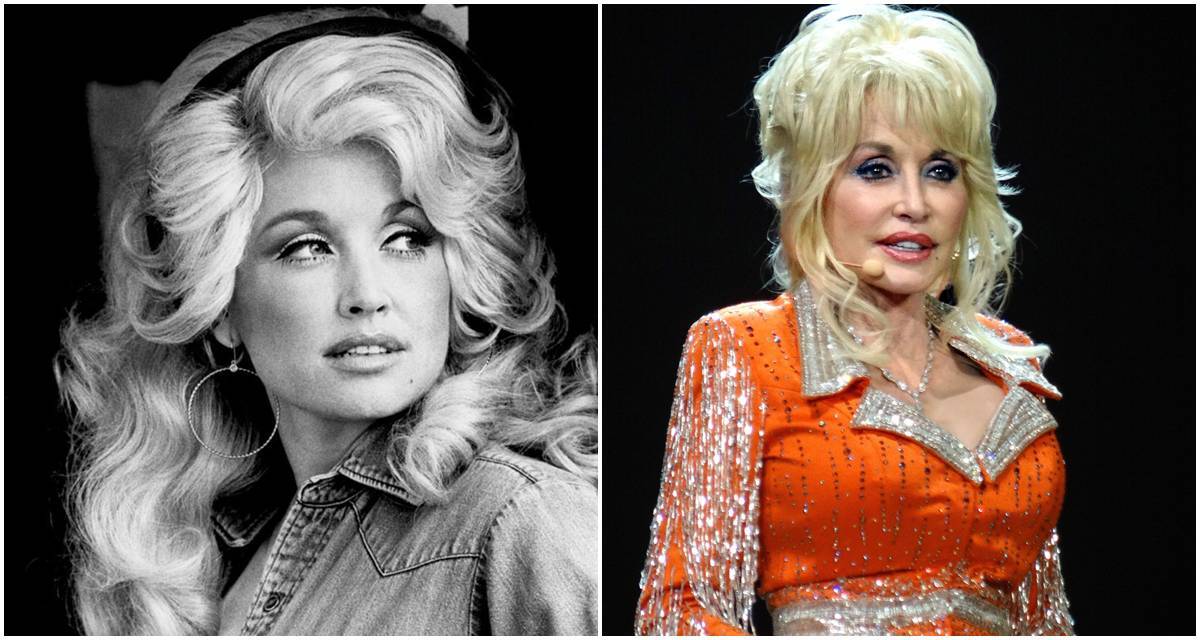 | ||
A portrait of Dolly Parton from 1977, and at the "Blue Smoke" World Tour. | ||
7 times Dolly Parton quietly made other people’s lives better | ||
She repeatedly chose to make the world a better place. | ||
By Heather Wake | ||
It takes a certain kind of celebrity to be loved by everyone. Country music icon and ultimate multi-hyphenate badass Dolly Parton, whose death in Nashville was announced last week, was one of those celebrities. | ||
The reason she is so loved is pretty simple: she repeatedly chose to make the world a better place. She did so not only through how she used her wealth but also through how she spoke with people. | ||
|
Media

One handwritten letter from Napa set off a chain reaction Under Armour never saw coming.
Riley Morrison, a 9-year-old basketball fanatic from Napa, California, had one item on her basketball season shopping list: a pair of Steph Curry's Under Armour Curry 5s. She and her dad pulled up the website and hit a wall. The shoes existed in the boys' section, but not the girls'. Same sneaker, same sizes, one arbitrary line she couldn't cross.
Most kids would've shrugged. Riley grabbed a pen. In this story from Adam Albright-Hanna, her letter to Curry lands like a tiny, devastating closing argument: "I know you support girl athletes because you have two daughters and you host an all-girls basketball camp. I hope you can work with Under Armour to change this because girls want to rock the Curry 5's too." Her dad posted it online, and it found its way to the man himself.
Plenty of famous athletes get letters. Almost none of them answer the way Curry did. His reply kicked off something much bigger than a nice note back, and years later, Riley's fingerprints are still on the brand.


On August 31, 1955, a General Motors engineer named William Cobb unveiled the world's first solar-powered automobile at the Powerama show in Chicago. The luxurious new ride was roomy at fifteen inches long. The "Sunmobile" was a model car, a hand-sized thing with about a dozen selenium cells on top. Sunlight hit the cells, the cells generated a current, the current spun a tiny motor, and the motor turned the rear axle via a pulley. No passengers. No steering wheel. Just proof.
The setting made it funnier. Powerama was a month-long, seven-million-dollar celebration of GM's diesel empire, spread across a million square feet on the Lake Michigan shore, with locomotives, oil wells, and submarines filling the halls. Cobb's little sun-powered toy sat in the middle of all that horsepower like a rumor.
Seventy-one years later, no fully solar-powered car has ever reached a showroom. But the technology Cobb was demonstrating, photovoltaics, went on to power satellites, calculators, and rooftops across the country. The toy won. The oil wells just took a while to notice.
Do you have something GOOD to share?
We’re always on the lookout for uplifting, enlightening, and engaging content to share with readers like you. If you have something you think should be featured in the Daily GOOD, let me know!
💬 From the group text…
On the off chance you ever have to prepare onions in space…

Join the Group Text! Send us your social media gold.
Until tomorrow, I give you permission to feel better… did it work? Hey, worth a shot.