- The Daily GOOD
- Posts
- Goo news for your knees
Goo news for your knees
Did you hear? Dolphins may be terrible gossips. Scientists are on the verge of changing a medical truism about cartilage with a GOOD goo. Plus, two ways to escape your scroll trance.

Greg Sullivan
April 02, 2026 • Est. Reading Time: 4 minutes

“Reading is that fruitful miracle of a communication in the midst of solitude.”
― Marcel Proust
In this issue...
Research
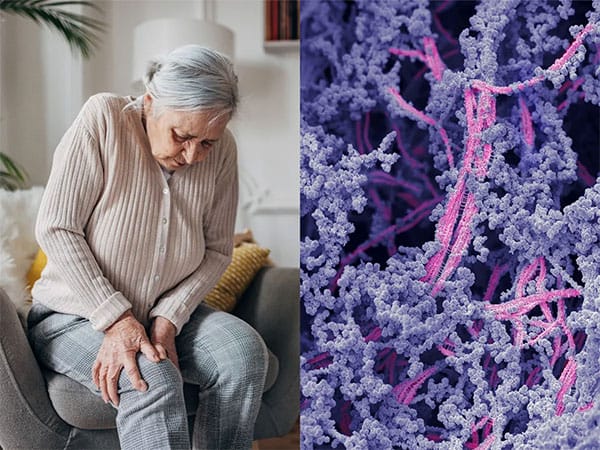
For anyone who's been told to just "manage" their joint pain, this research has other ideas.
Your reputation, that text you shouldn't have sent, and the cartilage in your knees. Once they're gone, they're gone. Science has made peace with the first two. But as Mark Wales reports, maybe the ship hasn’t sailed on that last one.
Researchers at Northwestern University have developed a bioactive material, a rubbery goo, that can actually regrow cartilage in damaged joints. In adult humans, cartilage has no meaningful ability to heal itself, which is why the standard medical advice has long been some version of "enjoy it while it lasts." The new material binds to surrounding tissue, builds a scaffold-like structure, and prompts cells to connect and rebuild.
The kneed is staggering: cartilage damage affects more than 500 million people worldwide, and current treatments fail badly enough that nearly 41% of microfracture surgery patients eventually end up needing a full knee replacement. This goo could potentially promise something different. But what the results actually looked like after six months, and how far away this is from a real clinical option, is where the story gets good.


GOOD reader Angela Towle took this photo from the Oregon Coast just this last weekend. It captures a contrasting feeling of excitement and foreboding. Makes me want to grab a sweater and find the nearest beach.
Do you have a GOOD picture to share?
Send us your best images, and we may feature them as the image of the day. Be sure to tell us a bit about your pic.
Solving the $100B Floral Industry’s Biggest Problem

In today’s floral industry, 60% of flowers are wasted before ever being sold. The Bouqs Co. uses proprietary tech to slash waste to <2% while getting flowers from farm-to-door 3x more efficiently. Now, they’re launching 70+ retail hubs to dominate the $18B U.S. market. Become a shareholder in The Bouqs Co.
Invest in The Bouqs Co.
This is a paid advertisement for The Bouq’s Regulation CF offering. Please read the offering circular at https://invest.bouqs.com/
Science
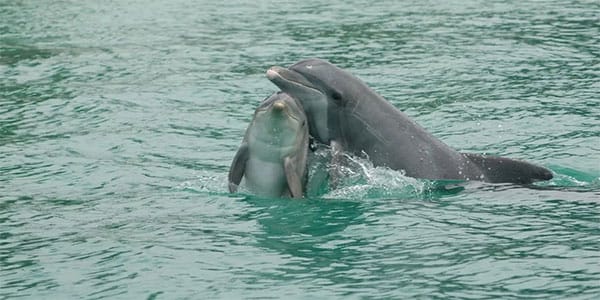
Large brains, complicated social lives, and at least 20 things to say about it.
After 55 years studying the same 170 dolphins, researchers have confirmed what the ocean probably already knew: these large-brained, highly social marine mammals are absolutely terrible gossips. Science is fun.
Every dolphin has a signature whistle that works like a name. Mothers pitch their voices higher with calves, the same instinct humans have with babies. Male best friends' whistles slowly grow to sound more alike over time. Marine biologist Laela Sayigh has been recording this same Sarasota community since the mid-1980s, and what she describes is less wildlife research than an extremely long-running social drama with fins.
“I could hardly believe my ears.”
She's since cataloged at least 20 distinct types of calls, with early evidence that some signal alarm. One appears to mean something close to surprise. And here's the detail they're still working to confirm: dolphins may be copying each other's signature whistles when that dolphin isn't even present. Possibly talking about them. To other dolphins. In a shared language researchers are only beginning to decode.

Who gets the title of "Best Creatures in the Sea"?This is a binding, legal survey, answer carefully. |
Who won yesterday’s argument?
Yesterday, we shared a negotiator’s tips for winning an argument, and I had to ask, "what's your actual go-to move in an argument?
I'm the "Raise My Voice And Repeat Myself" person. (28.9%)
I hate conflict, I fold like tissue paper. (24.4%)
I remain calm and logical and yes, I know it's infuriating. (34.4%)
I'm the Subject Changer! What about that thing you did last week?! (12.2%)
Well-being

The science of why you can't just put it down.
You know that feeling when you pick up your phone to check one thing and look up 40 minutes later, wondering where your evening went? That's not a willpower problem. It's an engineering feature. The infinite scroll, that bottomless feed that never reaches the bottom, was designed specifically to eliminate the moment when you'd naturally decide to stop.
Instagram used to actually tell you when you were "all caught up." Then the algorithm arrived, and the finish line disappeared. As Sharon Horwood explains, the design is devilishly effective because it exploits your brain's dopamine system: the promise of something good just around the corner keeps you moving far longer than the content itself ever could.
The good news is there are real ways out. The fixes are split into two distinct categories, and one of them is surprisingly fast. The other requires asking yourself a question most of us would rather keep scrolling to avoid.

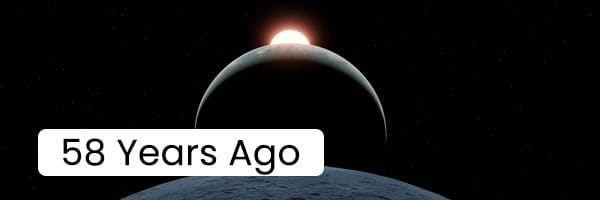
On April 2, 1968, Stanley Kubrick's 2001: A Space Odyssey had its world premiere at the Uptown Theater in Washington, D.C. Kubrick had been editing the film so furiously that he was still making cuts just days before opening night. Even Arthur C. Clarke, who co-wrote the screenplay, had not seen the finished version until he sat down in that theater.
The crowd's reaction was not exactly a standing ovation. 241 people walked out, including Rock Hudson, who reportedly demanded, "Will someone tell me what the hell this is about?"
The film's spacecraft designs were so grounded in real physics, with NASA scientists as consultants, that the visuals looked less like cinema and more like documentary footage. George Lucas borrowed filmmaking techniques from the movie to depict outer space in Star Wars, and Christopher Nolan cites it as a direct influence on Interstellar.
Of course, the effects were a little too convincing for some people's comfort. When Apollo 11 landed on the Moon just 15 months later, a devoted subset of viewers decided Kubrick had simply kept the cameras rolling. To this day, a cottage industry of conspiracy enthusiasts insists the greatest trick Stanley Kubrick ever pulled was faking one giant leap for mankind. The man who couldn't get a standing ovation in Washington allegedly pulled off the most-watched live broadcast in human history. HAL 9000 could not be reached for comment.
Do you have something GOOD to share?
We’re always on the lookout for uplifting, enlightening, and engaging content to share with readers like you. If you have something you think should be featured in the Daily GOOD, let me know!
💬 From the group text…
If the subtle space travel subtext of this week’s newsletters hasn’t outed me already, allow me to confess that I’m a space nerd! I’ve been tracking the Artemis II mission every step of the way. But some lucky people got to track it from a plane!
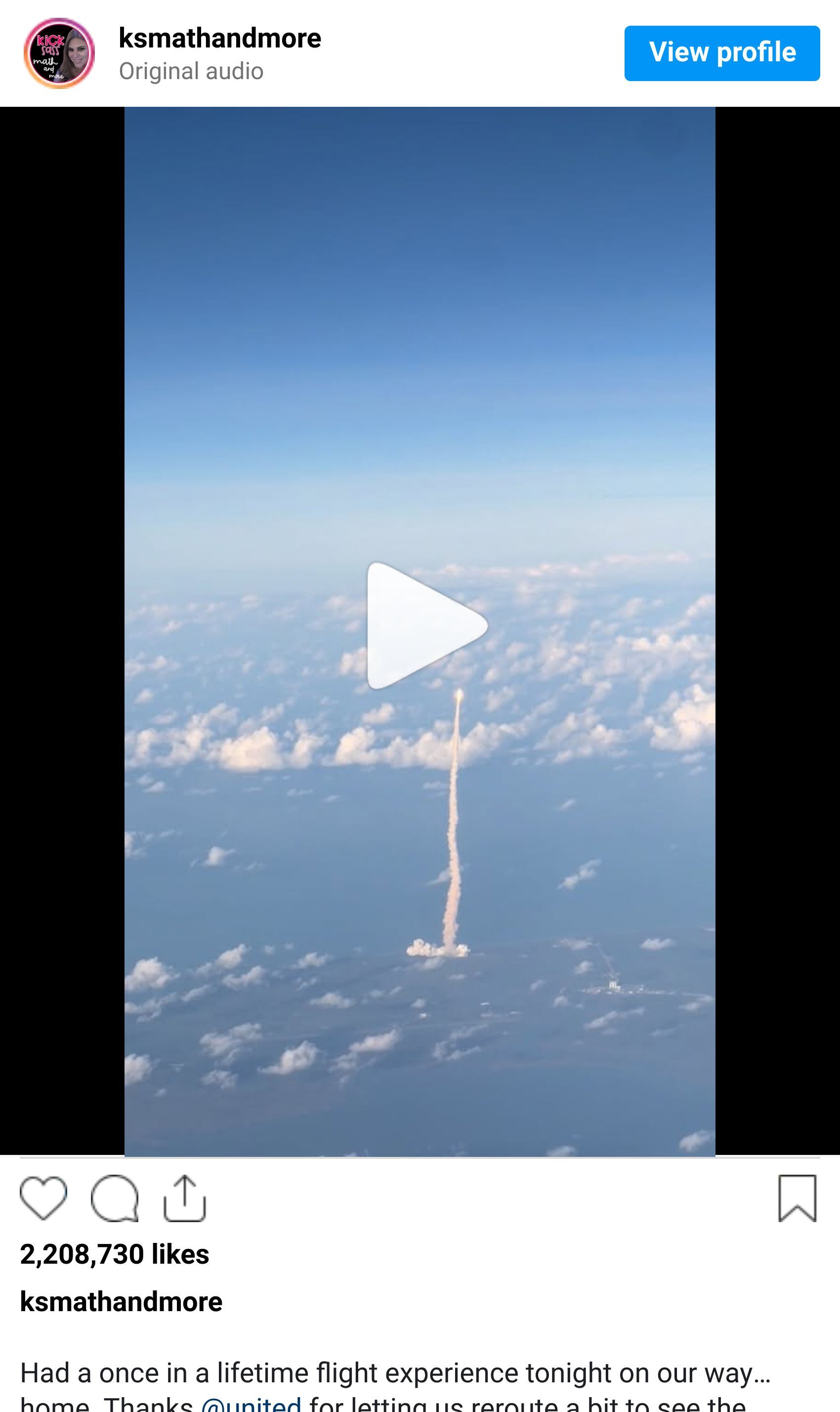
Join the Group Text! Send us your social media gold.
Until tomorrow, may your knees stay pliable and your dolphins be kind.