- The Daily GOOD
- Posts
- One artist's moving duet with themselves
One artist's moving duet with themselves
A deeper performance than Coachella was ready for. A simple cost-saving medical tip you should absolutely adopt. Plus, cities are taking the ‘wild’ out of wild animals.

Greg Sullivan
April 14, 2026 • Est. Reading Time: 4 minutes
In partnership with


“Like a wild animal, the truth is too powerful to remain caged.”
― Veronica Roth
In this issue...
Music

Coachella wasn't ready for a therapy session this public.
On a stage in the cold desert night of the Coachella Valley, two artists came together for a shockingly intimate, emotionally complicated performance. One was Justin Bieber. The other was also Justin Bieber. The former, 32 years old. The latter, just 13.
In a piece by Mark Wales, a licensed therapist named Blake Roberts watched the same performance and offered a completely different frame than the critics: inner child work, live and in public. "That little boy was artistic and creative," Roberts said. "Just doing his thing. Probably got made fun of a bunch, and then he gets thrown into this industry." What looked like a weird set choice, he argued, was actually something rarer: a grown man looking back at a younger version of himself with something like compassion.
Whether you find Bieber's current chapter sad, redemptive, or just a lot, the therapist's take reframes it. The performance is in the piece. So is the verdict.


GOOD reader James Delong came across this scrappy survivor making a life for itself in the Dixie National Forest near Panguitch, Utah. I feel like a tree with a trunk like that has a story to tell!
Do you have a GOOD picture to share?
Send us your best images, and we may feature them as the image of the day. Be sure to tell us a bit about your pic.
Take control of your chaotic inbox

Spam. Promotions. Phishing links. A messy inbox is more than annoying. It’s risky.
Proton Mail shields your inbox from invasive tracking and junk clutter by default. No creepy ad sorting. No surveillance. Just clean, simple organization designed to protect your focus.
You shouldn’t have to fight your email to find what matters. Proton Mail keeps your inbox safe, private, and easy to manage — so you can stay productive, not distracted.
Care

There is one question your doctor is waiting for you to ask.
I play Wordle. Which means I have a New York Times Games subscription. I pay around $5 a month for the privilege of a daily vocabulary gut-check. $5 for a little linguistic humility a day sounds right, but when I got the email saying my rate was jumping to $25, I went to cancel. They immediately offered me my old $5 price to keep me locked in. I said yes and went on with my day feeling like a genius.
Then I thought about the $200 prescription I filled last month without a single question.
Researchers Helen Colby and Deidre Popovich study exactly this disconnect. Their work found that cost conversations happen in only about 30% of medical visits, meaning 70% of us are out here negotiating harder for our Wordle access than for our healthcare. And here's the kicker: when patients do ask, doctors find a way to reduce costs almost half the time. Sometimes it's a generic. Sometimes it's a financial assistance program. Sometimes it's just a different pharmacy. The tools exist. The conversation usually doesn't.
They've identified three questions that can change what you pay, starting at your very next appointment. It’s just S M A R T

What's the slickest way you've saved a buck?Asking for a friend. (The friend is your bank account.) |
|
And what did we learn?
According to research we shared yesterday, you need two things to be truly happy. One of those two things is a true friend. What do GOOD readers think the best thing about a best friend is? Almost half of you love your friends for having seen you at your worst and sticking around anyway.
They tell you the truth, even when you don't ask (16.5%)
They've seen you at your worst and stayed anyway (47.3%)
They know where the skeletons are buried, and why (9.9%)
You can start the story in the middle, they know the history anyway (20.9%)
GOOD reader Gina Mosher put it best: “They have not only seen you at your worst, but they have experienced you at your worst and love you still.”
Science
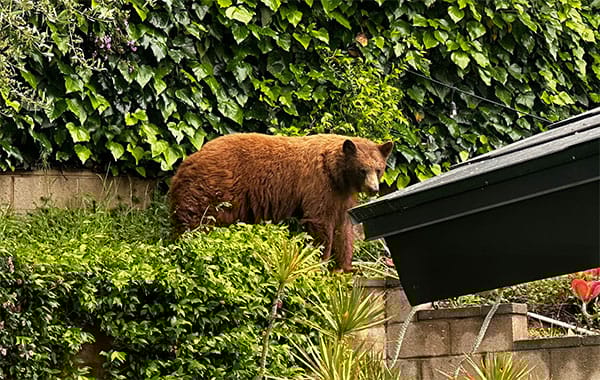
Urban animals worldwide are developing the same audacious habits. Scientists are worried.
In Monrovia, California, where I live, we've grown used to bears wandering through the neighborhood, raiding trash cans, and occasionally making themselves comfortable on someone's porch. It feels like a local novelty. Turns out it's a global pattern.
Wildlife researchers Daniel T. Blumstein, Peter Mikula, and Piotr Tryjanowski found that urban animals across the globe are converging on the same behaviors, a process scientists call "behavioral homogenization." New Delhi monkeys steal lunch off your plate. Sydney's ibises dive-bomb trash bins so reliably they've earned the nickname "bin chickens." New York squirrels will rifle through your bag while you're still sitting on it. Cities everywhere share the same basic conditions: warmth, noise, light pollution, and humans who rarely harm the animals around them. The result is a worldwide pressure cooker producing bolder, less fearful, more opportunistic creatures.
As urban animals get more alike, they're also losing the behavioral diversity that makes species resilient. Think of it as biodiversity loss, but for behaviors. One critically endangered Australian bird has already lost its ability to sing attractively enough to find a mate. What cities are building in their place is an entirely different kind of animal, and the researchers aren't sure we're ready for what comes next.


On April 14, 1828, a 70-year-old Yale-trained lawyer named Noah Webster registered the copyright on a book that had consumed 28 years of his life. Contrary to what many believe, Webster's Dictionary was not created to provide tepid intros to wedding speeches, but rather to declare linguistic independence for a new nation.
Webster believed the United States needed its own voice, and he made his case in 70,000 entries. He lobbied for simplified spellings, and many stuck: color instead of colour, center instead of centre, wagon instead of waggon. He added words the British simply didn't have: skunk, squash, moose, rattlesnake, stampede.
Not everything landed. Webster pushed hard for "tung" instead of tongue and "wimmen" for women. The public said no, and that was always the point. As Webster himself argued, a living language must change according to how people actually speak. Merriam-Webster still adds new words every year, from "rizz" to "situationship," proving that the people have been in charge of the dictionary all along.
Do you have something GOOD to share?
We’re always on the lookout for uplifting, enlightening, and engaging content to share with readers like you. If you have something you think should be featured in the Daily GOOD, let me know!
💬 From the group text…
I recognize the classic tune, but what is that bear of an instrument she’s playing?!?

Join the Group Text! Send us your social media gold.
Until tomorrow, may you show your younger self Bieber levels of empathy.