- The Daily GOOD
- Posts
- Stingless bees, boozy bellies, and colleges in crisis
Stingless bees, boozy bellies, and colleges in crisis
Some people brew booze in their bellies. Bees get legal rights. Colleges are panicking. Also, happy birthday to the C-section.

Greg Sullivan
January 14, 2026 • Est. Reading Time: 4 minutes
In partnership with


“Float like a butterfly, sting like a bee. The hands can't hit what the eyes can't see.”
― Muhammad Ali
In this issue...
Culture

Maybe the law can do what evolution could not.
The Melipona species of bees makes a honey with dozens of unique uses (including links to treatments for cancer, type-2 diabetes, obesity, and COVID-19), it pollinates 75% of Peru’s most important crops, and, my favorite part, it can’t sting you. They might be nature’s perfect overachievers.
“These bees are key to life in the Amazon.”
If you’ve rediscovered any optimism in the New Year, you may think such a wonder would be well protected. I hate to be the one to dampen that positive outlook, but… You know that’s not the case. Maybe if they had those stingers, they could defend themselves from the usual litany of threats, but since they don’t, something had to be done. I wouldn’t have gone with “give them legal standing in court,” but, as Mark Wales reports, two villages in Peru did just that, for what is believed to be the first time in history.


Receive Honest News Today

Join over 4 million Americans who start their day with 1440 – your daily digest for unbiased, fact-centric news. From politics to sports, we cover it all by analyzing over 100 sources. Our concise, 5-minute read lands in your inbox each morning at no cost. Experience news without the noise; let 1440 help you make up your own mind. Sign up now and invite your friends and family to be part of the informed.
Health

There’s always a price for free booze.
If you’re familiar with auto-brewery syndrome, you’re either one of the literally dozens of people who suffer from it, or you’re one of the millions who’ve seen it pop up on Chicago Med and other shows where a patient is judged hard, then doctors realize what’s going on just in time to save their job.
The syndrome is one of those rare conditions that basically explains itself. People with it have gut microbes in their digestive tract that turn carbs directly into alcohol. Automatically. Which sounds fun until it absolutely is not.
Until recently, patients had two options: live life half-hammered, or cut carbs entirely. (“Why did it have to be carbs? Why couldn’t it be vegetables?” said one sufferer, probably.) But as Erik Barnes reports, researchers have finally landed on a fix that appears to work.
It works. It’s effective. And it’s… so gross.

Before you read the next story on the state of college education, take a quick survey. We wouldn’t want to lead the witness.
Is college still worth it?Higher education used to promise a richer life. |
And what did we learn?
Yesterday, we shared the fascinating history of Martin Luther King Jr.’s interest in a Universal Basic Income.
I wanted to know how GOOD readers feel about UBI as a concept, and nearly three-quarters of you showed some level of support, either outright or begrudgingly.
Long overdue, solves so many social issues and brings basic dignity. (42.9%)
Promising, but prove it. I want more real-world trials. (25.0%)
I don't love it, but AI may force our hand when there are no jobs left. (10.7%)
Hard no. Work gives life meaning, and you can’t have my money. (21.4%)
Reader Luke Daniel spoke for the majority, “With AI at the forefront replacing a multitude of jobs and way more in the near future a "Universal Basic Income," is vitally important.” Maybe it’s time for another of Dr King’s ideas to gain traction?
Culture

The price of higher education keeps getting higher and higher, but the math can still work
There is a growing, politically motivated attack on the idea of higher education itself. Some people would prefer an uneducated populace, and their attacks seem to be working. Nearly two-thirds of Americans now say a four-year degree is not worth the cost.
Despite mountains of data showing that a degree still pays off financially, colleges and universities are not helping their own cause. They keep pairing degrees with mountains of debt while quietly paring back the classes that once made college feel expansive, curious, and worth the risk. Higher education has become more expensive, more transactional, and less ambitious.
In this story, Caroline Levander argues that the real problem is not whether college pays off, but what universities have stopped teaching along the way. Creativity, invention, and intellectual risk-taking used to be the point. Now they are often treated as electives.

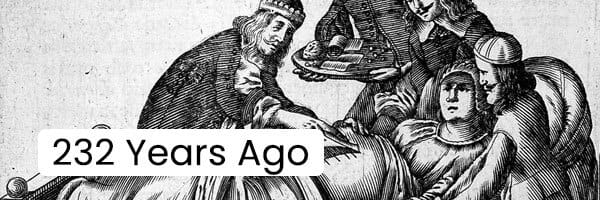
On January 14, 1794, in an act of desperation, Virginia physician Jesse Bennett performed the first documented successful cesarean section on his own wife, Elizabeth, bringing their daughter Maria into the world. Mother and daughter lived full, healthy lives, marking a major turning point in obstetrics.
The procedure was tried only after Elizabeth had endured prolonged, obstructed labor, and the attending physician refused to try any life-saving alternatives. In a log cabin with a board set across barrels, Bennett made a single abdominal/uterine incision, delivered a healthy daughter, and closed the wound with linen sutures.
Today, as many as a third of all births are C-sections, and there is growing concern about the number of C-sections being done. Some argue that pressure to make delivery convenient and profitable for hospitals (evidence shows hospitals that make more money per C-section perform more of them) is causing people to have the procedure who otherwise wouldn’t need it, but there is no debate that it saves lives, radically reducing both maternal and infant mortality.
Do you have something GOOD to share?
We’re always on the lookout for uplifting, enlightening, and engaging content to share with readers like you. If you have something you think should be featured in the Daily GOOD, let me know!
💬 From the group text…
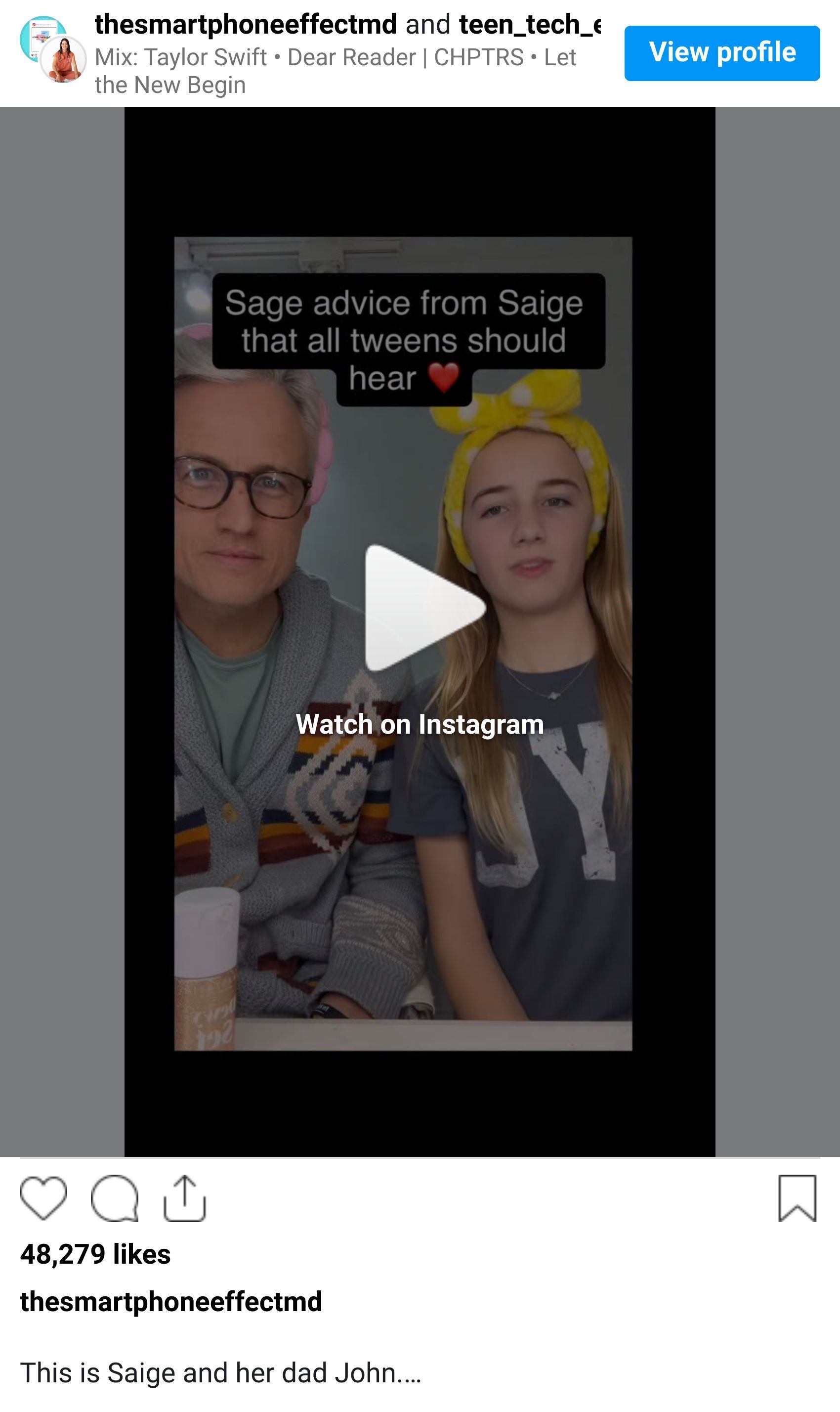
Come get ready with Saige and her dad, John. Not for some night out, but for a world that is always trying to sell something. This is powerful, and not what you think.
Join the Group Text! Send us your social media gold.
Until tomorrow, may you never have a disease interesting enough to be an episode of a medical drama.