- The Daily GOOD
- Posts
- You don’t actually have to do that
You don’t actually have to do that
Seven things you're doing that you just don't have to do, the new hot gift that isn't new at all, and memories of Robert Redford. Plus, the Nutcracker, beloved by all except those who have to dance it.

Greg Sullivan
December 18, 2025 • Est. Reading Time: 3 minutes
In partnership with


“Don't raise your voice, improve your argument.”
― Desmond Tutu
In this issue...
Culture

These tiny acts of rebellion unlock shocking amounts of freedom.
When we’re kids and don’t understand why something is the way it is, the grownups often just say “because” and expect us to take it. And we do. It’s the way it is, get used to it, kid. We get trained out of asking “why,” but according to this story by Ryan Reed, we might want to get back into the habit.
Why do I have to explain why I’m not coming into work today? Why do I have to sit through the rest of this movie I’m hating? Why do I have to drink coffee every morning? Well… you don’t. One commenter summed it up perfectly: quitting something that sucks is “maximum freedom.”
The common thread isn’t laziness or selfishness. It’s boundaries. And once you see how many so-called rules are optional, it’s hard to unsee.


Myth: Pet insurance doesn’t cover everything
Many pet owners worry that insurance won’t cover everything, especially routine care or pre-existing conditions. While that’s true in many cases, most insurers now offer wellness add-ons for preventive care like vaccines, dental cleanings, and check-ups, giving you more complete coverage. View Money’s pet insurance list to find plans for as low as $10 a month.

How do you feel about regifting?Whether you got something you had, or something you'd never want, is it right to pass it along? |
Yesterday’s Results
I was curious, which corporate-speak phrases have you caught yourself slipping into conversations at home? And we have a tie. Almost a three-way tie. Looks like we’re not aligned on expectations here, let’s put a pin in it and circle back in Q1.
Let’s close the loop... (32.3%)
I'd like to align on expectations. (32.3%)
What does success look like here? (29.0%)
Let's loop in the stakeholders on this. (6.5%)
Money

New research says it’s the thought that counts, and we’re not thinking hard enough these days.
Not long ago, gift shopping meant hunting down the perfect thing, at the perfect time, in the perfect place. Now it means a wishlist, an algorithm, and a box on your porch two days later. Efficient, yes. Memorable, not so much.
As Erik Barnes reports in this story, a new study out of the University of Eastern Finland suggests secondhand gifts are actually more thoughtful than brand-new ones. They take more time, more intention, and more risk. No free returns. No identical backups on the shelf. Just one item, chosen with a specific person in mind.
Researchers found that thrifting is rising not just because of tighter budgets, but because shoppers value sustainability, small businesses, and the thrill of finding something genuinely unique. Especially among Gen Z, a thrifted gift is starting to signal care, creativity, and taste rather than compromise.
Buying new says, “I ordered this for you.” Buying secondhand says, “I saw this and thought of you.” That difference is doing a lot of work right now.
Culture

An early role offered a glimpse of things to come.
Robert Redford passed away earlier this year at the age of 89, leaving behind a legacy of storytelling, activism, and quiet grace. One of his earliest roles, a 1962 episode of The Twilight Zone, is now resurfacing, and it’s as tender as it is unforgettable.
In "Nothing in the Dark," Redford plays Death, not as a villain, but as a kind, soft-spoken figure who eases an elderly woman’s fear of the unknown. It’s a beautiful performance, one that now feels like a quiet farewell. As Ryan Reed writes, Redford’s version of Death wasn’t something to fear, but something to finally trust.

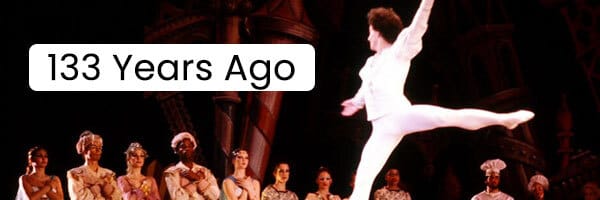
By December 18, 1892, Pyotr Ilyich Tchaikovsky was already an internationally renowned composer. He had toured well beyond his native Russia, including performances at Carnegie Hall in the United States the year before. So when it came time to debut his new ballet, The Nutcracker, expectations were sky high.
Given that most people can hum several melodies from the show more than 130 years later, you might assume it was an instant triumph. It was not. The holiday classic debuted to a mixed reception. The Nutcracker Suite had already been warmly embraced at its March 1892 concert premiere, and even at the December ballet debut, critics largely admired the score while faulting the production. It would take several revivals and revisions to the staging and choreography before the ballet became the international holiday ritual we know today.
133 years later, audiences treasure The Nutcracker as part of their holiday tradition. Dancers, meanwhile, brace themselves for the gauntlet. There is the Sugar Plum Fairy’s marathon pas de deux and glittering solo, the blisteringly fast Dewdrop sprint in Waltz of the Flowers, and the endurance test of Snowflakes, traditionally danced beneath a literal blizzard of paper snow. Beautiful and brutal, like winter itself.
Do you have something GOOD to share?
We’re always on the lookout for uplifting, enlightening, and engaging content to share with readers like you. If you have something you think should be featured in the Daily GOOD, let me know!
💬 From the group text…
She makes an impassioned case, and I, for one, am persuaded.

Join the Group Text! Send us your social media gold.
Until tomorrow, may you find the courage to put down that book you’ve been slogging through. The next one will be better.